How blockchain for digital assets works in tokenization, settlement and custody
a[data-rs-seo-link]{text-decoration:underline!important;color:#1a56db!important;cursor:pointer!important;}a[data-rs-seo-link]{text-decoration:underline!important;color:#1a56db!important;cursor:pointer!important;}
The role of blockchain in digital assets
Blockchain for digital assets is better understood as a shared recordkeeping and settlement layer than as a wholesale replacement for financial infrastructure. It can record ownership, transfer instructions and programmable rules for assets that are native to a network, such as cryptocurrencies, or for off-chain claims, such as tokenized fund shares, stablecoins or securities. Its main value is coordination: multiple parties can work from the same ledger, automate parts of the transaction flow and reduce some reconciliation work. Its main limit is just as important: a token has real-world value only when law, custody, governance and redemption rights support it.
That distinction matters because the market conversation has moved beyond crypto trading. Regulators, asset managers, banks and infrastructure providers now discuss digital assets in terms of market plumbing: issuance, identity, settlement finality, collateral mobility, custody controls and investor protection. Blockchain can improve some of these functions, but only when the asset design is matched to a credible legal and operational framework.
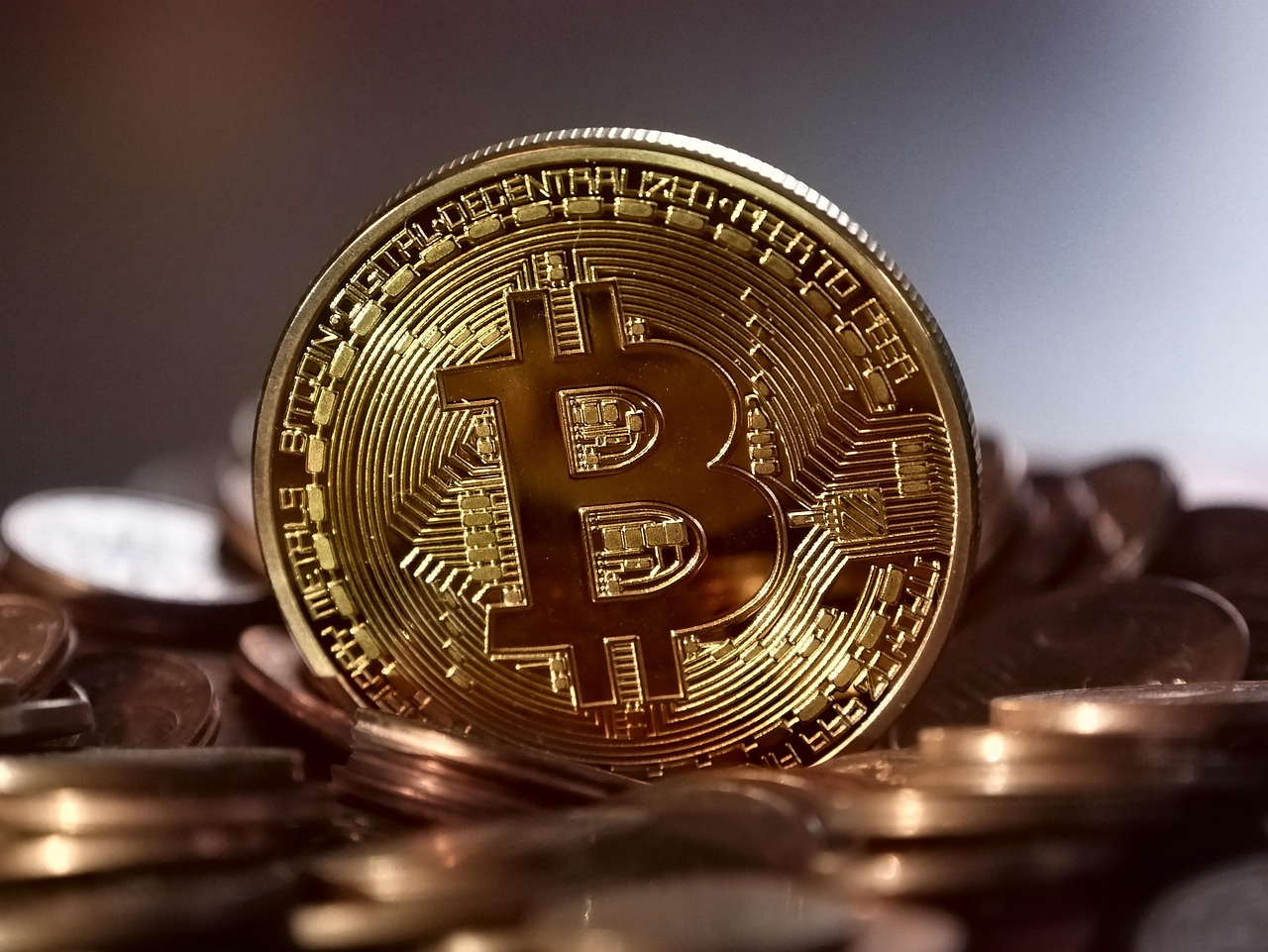
What counts as a digital asset on a blockchain
A digital asset is not a single product category. The term can cover a native cryptoasset, a tokenized claim on a traditional asset, a stablecoin, a security token, a fund share, a deposit-like instrument or a non-financial digital object. In financial markets, the key question is whether the asset exists natively on the blockchain or whether the token represents a claim outside the blockchain.
- Native cryptoassets include assets such as bitcoin and ether, where ownership and transfer are recorded directly on the relevant network.
- Stablecoins are tokens designed to maintain a stable value against a reference asset, usually a fiat currency, depending on reserve management and issuer obligations.
- Tokenized securities and funds represent interests in instruments that are already familiar in traditional finance, such as money market fund shares, bonds or equity-like claims.
- Tokenized real-world assets may represent claims on treasuries, commodities, invoices, real estate interests or other assets that require off-chain verification.
In each case, blockchain does not remove the need to ask basic financial questions. What does the holder legally own? Who is responsible for redemption? What happens if the issuer fails? How is the asset valued? Which regulator has jurisdiction? These answers determine whether a token is only a tradeable data entry or a legally enforceable financial instrument.
Why tokenization is the main institutional use case
Tokenization is the process of representing an asset, claim or right as a blockchain-based token. The Bank for International Settlements has described tokenization as combining a record of the asset and ownership with a programmable service layer. In practical terms, the token can carry both the ownership record and some of the rules for transfer, settlement or servicing.
This is why tokenization has drawn attention from traditional financial institutions. A fund share can be issued as a token. A cash-like asset can be used for on-chain settlement. Collateral may be able to move faster between counterparties. Compliance checks can be embedded into transfer rules. Corporate actions, coupon payments and redemptions can be partly automated, although they still depend on legal documentation and reliable data inputs.
Tokenized treasury and liquidity products are a useful example. BlackRock stated in its 2025 annual report that its digital assets exchange-traded products and tokenized liquidity fund ended 2025 with nearly $80 billion and $2 billion of assets, respectively. That does not mean tokenization has replaced traditional funds. It does show that large asset managers have begun testing blockchain rails for regulated, institutional products rather than only for speculative crypto exposure.
For readers following the broader market structure shift, the Digital Assets category is the right place to track how tokenization, custody and regulation are converging.
Settlement and custody are where design choices matter
The strongest argument for blockchain in digital assets is not that every transaction should be public or decentralized. It is that different assets can use different ledger designs depending on their risk profile. A public blockchain may provide broad transparency and composability. A permissioned network may give institutions tighter control over participants and data access. A hybrid model may use public settlement with permissioned compliance layers.
| Design choice | Where it can help | Main trade-off |
|---|---|---|
| Public blockchain | Transparent settlement, open liquidity, interoperability with wallets and protocols | Privacy, governance, congestion, transaction cost and compliance complexity |
| Permissioned blockchain | Institutional settlement, controlled participation, clearer access rules | Lower openness and a greater need to trust the network operator or consortium |
| Hybrid model | Combines public verification or settlement with permissioned identity and transfer controls | More complex architecture and more integration work |
Custody is as important as the ledger itself. In traditional markets, custodians safeguard assets and maintain records through regulated processes. In digital assets, the ability to move an asset often depends on control of cryptographic keys. That creates a different risk model. Lost keys, compromised signing systems, weak approval governance or poor segregation of client assets can cause losses even when the underlying blockchain operates as designed.
Institutional custody therefore involves more than cold storage. It requires role-based controls, insurance where available, audit trails, disaster recovery, segregation of duties, wallet governance, transaction screening and clear treatment of client assets. Blockchain can make transfers visible, but it cannot decide on its own whether a transfer was authorized under a firm’s internal policy or under applicable law.
Regulation is now part of the product design
The regulatory direction since 2023 has been clear: digital asset markets are being pulled toward familiar standards for governance, disclosure, custody, market abuse controls and operational resilience. The Financial Stability Board finalized a global regulatory framework for crypto-asset activities in July 2023. IOSCO followed in November 2023 with policy recommendations for crypto and digital asset markets, covering issues such as conflicts of interest, market integrity and custody.
In the European Union, the Markets in Crypto-Assets Regulation created a harmonized framework for crypto-assets not already covered by existing financial services law. Its rules for asset-referenced tokens and e-money tokens became applicable on June 30, 2024, and its rules for crypto-asset service providers became applicable on December 30, 2024, with transitional arrangements varying by member state.
In the United States, the GENIUS Act was signed into law on July 18, 2025, establishing a federal framework for payment stablecoins. Separately, the U.S. Securities and Exchange Commission approved the listing and trading of certain spot bitcoin exchange-traded products on January 10, 2024, and approved proposed rule changes for spot ether exchange-traded products on May 23, 2024. These developments did not remove all legal uncertainty, but they did show that regulated wrappers and regulated issuers are becoming central to mainstream access. See also: Blockchain Technology.
The lesson for builders and investors is straightforward: compliance cannot be bolted on after launch. If a token represents a regulated asset, the product must be designed around transfer restrictions, disclosure, custody, recordkeeping, investor eligibility and redemption mechanics from the beginning.
Risks that blockchain does not remove
Blockchain can reduce some operational friction, but it does not eliminate financial risk. In some cases, it changes where the risk appears. The most important risks include:
- Legal enforceability: A tokenized claim needs documents and jurisdictional clarity. Without them, the token may not give the holder the rights they expect.
- Oracle risk: If a smart contract relies on outside data, the quality of that data becomes part of the risk.
- Smart contract risk: Code can contain errors, and upgrades can introduce governance disputes.
- Custody risk: Private key control, wallet governance and client asset segregation remain critical.
- Liquidity risk: A token may settle quickly but still have limited buyers, thin order books or fragmented venues.
- Privacy risk: Public ledgers can reveal transaction patterns, while private ledgers can reduce transparency.
- Regulatory classification risk: The same technical token design may be treated differently across jurisdictions.
This is why serious digital asset projects usually look less like pure technology launches and more like coordinated legal, operational and financial infrastructure projects.
A practical framework for evaluating blockchain-based digital assets
Before treating any blockchain-based asset as investable or institutionally ready, it helps to evaluate it through five questions.
- What is the asset? Identify whether the token is a native cryptoasset, a payment token, a fund interest, a security, a commodity-linked claim or another instrument.
- Who owes what to whom? For tokenized claims, determine the issuer, reserve structure, redemption rights, legal documentation and insolvency treatment.
- How does settlement work? Review whether settlement is on-chain, off-chain or dependent on an intermediary, and whether cash and asset legs can settle safely.
- Who controls custody? Understand private key governance, custodian responsibility, transfer approvals, recovery procedures and auditability.
- What rules apply? Consider securities law, payment law, stablecoin rules, anti-money-laundering obligations, tax treatment and cross-border restrictions.
This framework is more useful than asking whether blockchain is good or bad in general. The better question is whether the ledger, legal rights and operating model fit the asset’s purpose.
Frequently asked questions
Is blockchain necessary for every digital asset?
No. Some digital records work well in traditional databases. Blockchain becomes more useful when multiple parties need a shared source of truth, programmable transfer rules, transparent audit trails or settlement without relying on one internal database.
Is tokenization the same as securitization?
No. Securitization is a financial structuring process that pools assets and issues securities backed by cash flows. Tokenization is a method of representing ownership or claims on a blockchain. A securitized product could be tokenized, but the two concepts are not the same.
Can blockchain reduce settlement time?
It can, especially when asset transfer and payment are designed to settle on compatible rails. However, faster technical settlement still depends on legal finality, compliant cash legs, custody controls and operational readiness among participants.
Are tokenized real-world assets safer than cryptoassets?
Not automatically. Tokenized real-world assets may be linked to familiar collateral, such as treasuries or fund shares, but they still carry issuer, custody, liquidity, documentation and regulatory risks. The token format does not guarantee safety.
What is the main takeaway for investors and builders?
The strongest use of blockchain for digital assets is not speculation for its own sake. It is the careful design of assets that combine clear legal rights, reliable custody, efficient settlement and transparent governance. Projects that solve all four problems are more likely to matter than projects that only issue a token.