Digital assets and blockchain in 2026 explained for investors and institutions
a[data-rs-seo-link]{text-decoration:underline!important;color:#1a56db!important;cursor:pointer!important;}a[data-rs-seo-link]{text-decoration:underline!important;color:#1a56db!important;cursor:pointer!important;}
Why digital assets and blockchain matter now
Digital assets and blockchain are no longer simply shorthand for cryptocurrencies. In 2026, the terms cover a wider market in which tokens may represent money-like instruments, investment exposure, financial claims, collectibles, credentials, or operational data. The relevant shift is not that every asset should move on-chain. It is that regulators, banks, asset managers, market infrastructure providers, and public companies are treating tokenized records as part of mainstream financial architecture.
For investors and institutions, the question has moved from whether the technology can function to where it improves settlement, auditability, programmability, or access enough to justify the added custody, legal, cybersecurity, and liquidity risks. For ongoing market coverage, see our Digital Assets section.
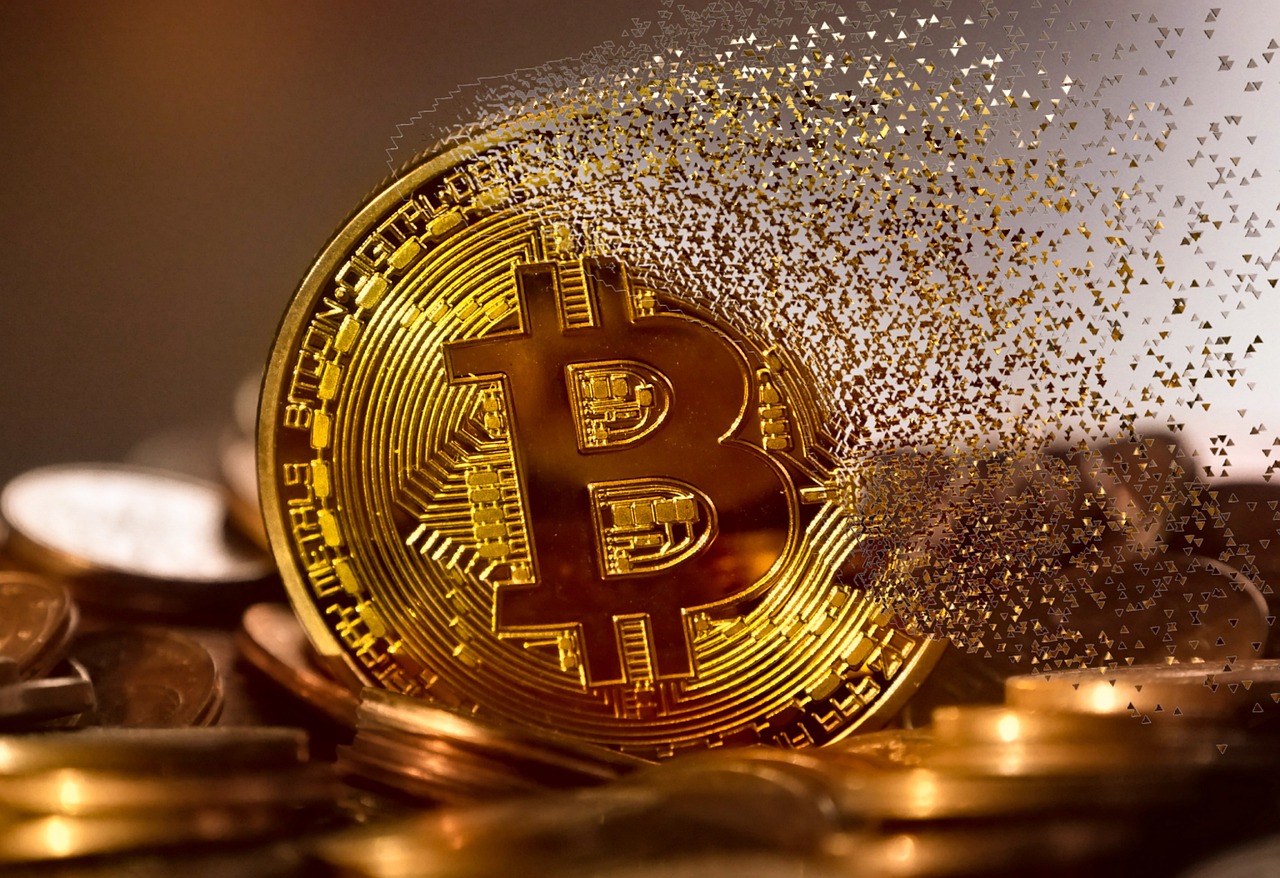
This guide explains the main categories, the role of blockchain, the regulatory timeline, and a practical framework for evaluating opportunities without treating tokenization as a guarantee of value.
What counts as a digital asset
A digital asset is best understood as a digitally recorded item that can be owned, transferred, or controlled through software. Some digital assets exist only on blockchain networks. Others are digital representations of assets or claims that also exist within traditional legal systems. Because the term is broad, classification matters.
Cryptoassets such as bitcoin and ether are the best-known examples. They are native to their networks and usually depend on decentralized validation, cryptographic keys, and market-based pricing. Stablecoins are different. They are designed to maintain a reference value, commonly to a fiat currency, and their risk profile depends heavily on issuer reserves, redemption rights, supervision, and operational controls.
Tokenized real-world assets are another category. These can include tokenized funds, bonds, deposits, collateral claims, invoices, or other financial assets where a blockchain token records ownership or transfer instructions. Non-fungible tokens and digital collectibles also sit within the wider digital asset market, although their value drivers are often cultural, contractual, or access-based rather than purely financial.
A token can also represent identity credentials, supply-chain events, voting rights, carbon-related claims, or usage rights in a digital network. The technology may look similar across these examples, but the legal and economic substance can be completely different.
| Asset type | What blockchain may add | Main due diligence question |
|---|---|---|
| Native cryptoassets | Decentralized transfer, network incentives, transparent supply rules | Does the asset have liquidity, security, and a credible network purpose? |
| Stablecoins | Faster digital settlement and programmability | Are reserves, redemption rights, and issuer oversight clear? |
| Tokenized traditional assets | Potential settlement automation and collateral mobility | Does the token have enforceable rights to the underlying asset? |
| Digital collectibles | Scarcity records, access rights, creator royalties, or community features | Is the value based on durable demand or short-term speculation? |
| On-chain credentials and data | Portable verification and tamper-resistant records | Who controls updates, privacy, revocation, and dispute resolution? |
How blockchain changes settlement, ownership, and market design
Blockchain is a shared ledger system that records transactions through cryptographic controls and network rules. In public networks, many independent participants help validate activity. In permissioned networks, approved institutions operate the infrastructure. The design choice matters because public and private blockchains involve different trade-offs around openness, throughput, governance, privacy, and regulatory control.
The first practical benefit is a common record. In traditional markets, trading, clearing, settlement, custody, reporting, and reconciliation can involve several databases. Tokenization can reduce some duplication by allowing participants to work from a shared transaction record. That does not automatically remove intermediaries. It may instead change their role from record-matching to rule-setting, risk management, identity verification, and dispute handling.
The second benefit is programmability. Smart contracts can automate transfers, interest calculations, collateral movements, compliance checks, or corporate actions when predefined conditions are met. This can be useful in markets where manual processing creates delays and operating cost. However, smart contracts are only as reliable as their code, governance, legal enforceability, and data inputs. A bug, oracle failure, or unclear contract term can create risk rather than remove it.
The third benefit is potential settlement speed. Blockchain networks can operate continuously, which is attractive in a global market that does not stop at local banking hours. Faster settlement is not always better, however, if compliance reviews, fraud controls, liquidity funding, and customer protections are not prepared for real-time movement. For institutions, the goal is controlled speed, with legal finality, resilient infrastructure, and clear accountability.
The regulatory reset shaping the market
The regulatory environment for digital assets has moved from broad warnings toward more detailed rulemaking and supervision. The market is still not fully harmonized. The change is that policymakers have increasingly separated asset types, intermediaries, and risks instead of treating every token as the same product.
The Financial Stability Board’s July 2023 global framework set an important baseline by promoting consistent oversight of cryptoasset activities and global stablecoin arrangements. Its core policy direction can be summarized as similar rules for similar risks. That approach matters because a tokenized activity can still involve familiar financial risks, including leverage, custody failure, market manipulation, conflicts of interest, operational outages, and runs on redeemable instruments.
In the European Union, the Markets in Crypto-Assets framework introduced a structured regime for cryptoasset issuers and cryptoasset service providers. Stablecoin-related provisions began applying on June 30, 2024, and the broader framework became fully applicable on December 30, 2024. The EU approach is important because it created a passport-style model for authorized providers while also imposing disclosure, governance, and conduct requirements.
In the United States, the Securities and Exchange Commission approved spot bitcoin exchange-traded products on January 10, 2024, and approved exchange rule changes for spot ether exchange-traded products on May 23, 2024. These approvals did not eliminate the risks of the underlying assets, but they changed access by allowing exposure through regulated market products. The U.S. also enacted the GENIUS Act on July 18, 2025, creating a federal framework for payment stablecoins. For businesses, that made stablecoin compliance, reserve quality, and issuer selection more central to product planning.
Accounting and bank capital rules also matter. The Financial Accounting Standards Board issued ASU 2023-08 in December 2023, requiring certain crypto assets to be measured at fair value with changes recognized in net income for fiscal years beginning after December 15, 2024. The Basel Committee has also developed prudential standards for banks’ cryptoasset exposures, including targeted amendments scheduled around the 2026 implementation period. These developments show why digital assets are not only a technology question. They are also a reporting, capital, risk, and governance question.
Where institutions are finding practical use cases
Institutional interest is strongest where blockchain can improve a specific workflow. Tokenized money market funds, tokenized Treasury-related products, collateral mobility projects, and settlement experiments have attracted attention because they target real operational frictions. In these areas, the value proposition is not simply that an asset is on-chain. It is that ownership records, transfer instructions, and compliance logic may be coordinated more efficiently. See also: Blockchain Technology.
Stablecoins are another major use case because they can provide digital settlement units for exchanges, cross-border payments, decentralized finance, and business-to-business workflows. The key limitation is that a stablecoin is only as strong as its issuer, reserve assets, redemption mechanics, governance, and legal treatment. A token that trades near one dollar in calm markets can still face stress if users doubt the backing or cannot redeem quickly.
Tokenized funds and securities may offer better distribution, fractional access, automated compliance, and faster post-trade operations. Yet they depend on legal clarity around ownership, investor eligibility, transfer restrictions, custody, and the relationship between the token and the official register. If a token is only a shadow record without enforceable rights, it may add complexity rather than efficiency.
There is also growing interest in using blockchain for audit trails, identity, supply chains, loyalty systems, gaming economies, and machine-to-machine payments. These applications may not look like investment products, but they still raise questions about privacy, consumer protection, data accuracy, governance, and reversibility. In many cases, a conventional database remains cheaper and easier. Blockchain becomes more compelling when multiple parties need a shared record but do not want to rely entirely on one participant’s database.
Risks that should not be hidden by the technology
The most common mistake is assuming that blockchain transparency equals safety. Public ledgers can make transfers visible, but they do not prove that an asset is fairly priced, legally enforceable, properly backed, or suitable for an investor. Transparency helps analysis; it does not replace due diligence.
- Custody risk: Control of private keys can determine control of assets. Institutions need segregation, recovery procedures, insurance analysis, access controls, and independent audits.
- Smart contract risk: Code can contain vulnerabilities, and upgrades may depend on governance processes that are not obvious to end users.
- Liquidity risk: A token may trade actively in normal markets but become difficult to sell during stress, especially if liquidity is concentrated on a few venues.
- Legal risk: The token may not clearly represent ownership, a claim, a security, a commodity, a payment instrument, or a service right in every jurisdiction.
- Counterparty risk: Stablecoins, wrapped assets, bridges, custodians, exchanges, and tokenization platforms can introduce dependencies that are not visible from the token alone.
- Operational risk: Networks, validators, wallets, or data providers can fail, be attacked, or change rules through governance decisions.
- Tax and reporting risk: Transactions can create taxable events, valuation issues, and disclosure obligations even when they occur automatically.
Investors should also separate network adoption from token price. A blockchain can be useful while a specific token remains volatile or overvalued. Similarly, a tokenized asset can improve operations without creating extra investment return. Returns still depend on the economics of the underlying asset, fees, liquidity, and risk.
A practical evaluation framework
A disciplined review starts with the asset, not the narrative. First, identify what the token represents. Is it a native cryptoasset, a claim on reserves, a fund interest, a security, a loyalty point, a collectible, or a record of data? Second, identify who is responsible. Decentralization is a spectrum, and many products marketed as blockchain-based still rely on issuers, custodians, administrators, or governance committees.
Third, test the legal connection between the token and the promised right. If a token represents a real-world asset, investors need to know whether the token holder has a direct claim, an indirect contractual claim, or only exposure through an intermediary. Fourth, examine redemption and exit. A digital asset is more credible when users can understand how to convert, transfer, redeem, or enforce their rights in both normal and stressed conditions.
Fifth, evaluate technical resilience. This includes smart contract audits, upgrade permissions, bridge exposure, wallet security, validator concentration, and incident history. Sixth, review compliance fit. A token used by a retail investor, a registered fund, a bank, and a global payment company may trigger different obligations. Finally, compare the blockchain solution with a non-blockchain alternative. If the same result can be achieved with a simpler system, tokenization may be unnecessary.
The most durable digital asset projects tend to solve a narrow problem clearly. They do not rely only on broad claims about disruption. They specify the users, legal rights, settlement process, risk controls, and economic incentives.
Frequently asked questions
Are digital assets the same as cryptocurrencies?
No. Cryptocurrencies are one category of digital asset. The broader term can also include stablecoins, tokenized securities, tokenized funds, digital collectibles, on-chain credentials, and other programmable records of ownership or rights.
Why use blockchain instead of a normal database?
A normal database is often better when one trusted operator controls the system. Blockchain becomes more useful when multiple parties need a shared record, programmable transfers, or reduced reconciliation without giving one participant full control over the ledger.
Are stablecoins low risk?
Not automatically. Stablecoins can reduce price volatility compared with many cryptocurrencies, but they introduce issuer, reserve, redemption, custody, operational, and regulatory risks. The design and supervision of the issuer matter more than the label.
Does tokenization increase the value of an asset?
Tokenization can improve access, settlement, or operational efficiency, but it does not by itself make an asset more valuable. The underlying cash flows, legal rights, liquidity, fees, and market demand still determine value.
What should investors watch in 2026?
Key areas include stablecoin implementation, tokenized fund adoption, bank capital treatment, custody standards, exchange-traded crypto products, and cross-border regulatory coordination. The strongest opportunities are likely to come from projects that combine technical utility with enforceable rights and transparent risk controls.