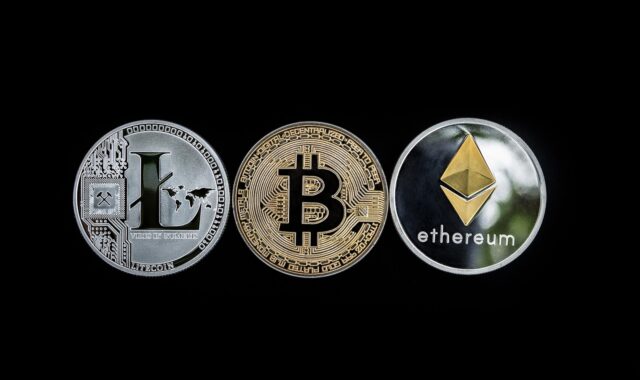
Digital assets technology in finance from blockchains to tokenized securities
a[data-rs-seo-link]{text-decoration:underline!important;color:#1a56db!important;cursor:pointer!important;}a[data-rs-seo-link]{text-decoration:underline!important;color:#1a56db!important;cursor:pointer!important;}
Digital assets technology is becoming financial infrastructure
Digital assets technology is no longer limited to coins listed on exchanges. In finance, it now refers to the technical stack used to record ownership, move value, automate contractual steps, secure private keys, and connect digital tokens to legal rights. The important shift is from speculation toward market infrastructure: tokenized securities, stablecoins, tokenized deposits, collateral workflows, and regulated custody.
That does not mean every asset should move on-chain, or that tokenization automatically creates liquidity. It means banks, asset managers, payment firms, exchanges, and regulators are increasingly treating the underlying technology as a design choice for future financial plumbing.
For broader coverage of the sector, visit our Digital Assets section. This article focuses on how the technology works, where it may add value, and what still limits institutional adoption.
What digital assets technology includes
A digital asset can be a native crypto asset, a stablecoin, a tokenized fund share, a tokenized bond, a tokenized deposit, a security represented on distributed ledger technology, or a non-financial token that records access or identity rights. The technology is therefore broader than blockchain alone. It combines ledger design, token standards, key management, settlement logic, compliance controls, and governance.
| Technology layer | Role in digital assets | Key question for finance |
|---|---|---|
| Distributed ledger or blockchain | Records transactions and ownership state across a shared system | Who can validate transactions, and how is finality achieved? |
| Token design | Defines what the token represents and what rights or restrictions attach to it | Does the token map clearly to a legal claim? |
| Smart contracts | Automate transfer, payment, eligibility, or corporate action rules | Who can upgrade, pause, or correct the code? |
| Wallets and custody | Control private keys and authorization to move assets | How are loss, theft, recovery, and segregation handled? |
| Identity, compliance, and data | Connect tokens to verified users, rules, market data, and off-chain records | Can the system meet AML, sanctions, tax, and reporting duties? |
The practical point is straightforward: a token is only the visible layer. The value of digital assets technology depends on whether the full stack can support enforceable ownership, operational resilience, and regulatory obligations.
Why tokenization changed the conversation
Tokenization means representing an asset or claim as a programmable digital token. In capital markets, that can include bonds, fund shares, commodities, invoices, deposits, or collateral. The Bank for International Settlements has described tokenization as a way to combine information about an asset, ownership, platform rules, and governance in a programmable environment. Its work on unified ledgers also highlights a central issue: the largest benefits may appear when tokenized assets and tokenized forms of money can interact in the same venue or across interoperable venues.
The appeal is not that a token is fashionable. It is that tokenized systems may reduce operational breaks between trade execution, settlement, collateral movement, and recordkeeping. Potential benefits include:
- Atomic settlement: payment and asset transfer can be linked so one leg does not complete without the other.
- Programmable compliance: transfer restrictions, investor eligibility, or holding limits can be embedded into workflows.
- Collateral mobility: assets can be represented and moved more quickly across approved venues.
- Operational transparency: authorized parties may see a shared record instead of reconciling multiple ledgers.
- Automated servicing: coupon payments, redemptions, or fund subscriptions can be connected to token logic.
There are clear limits. Tokenization does not, by itself, create buyers, solve valuation, remove credit risk, or make an illiquid asset liquid. A tokenized private asset can still be hard to price and difficult to exit. The technology may improve the rails, but it does not erase the economic characteristics of the asset.
Stablecoins and tokenized money are the settlement layer
Digital asset markets need a way to settle cash legs. Stablecoins became important because they offer a digital payment asset that can move on blockchain rails. Tokenized deposits and wholesale central bank digital currency experiments point to another model: regulated money represented on programmable infrastructure. The design choice matters because settlement assets carry legal, reserve, liquidity, and redemption risks.
The regulatory environment has moved quickly. In the European Union, the Markets in Crypto-Assets Regulation began applying to asset-referenced tokens and e-money tokens on June 30, 2024, and applied more broadly from December 30, 2024. In the United States, the GENIUS Act was signed on July 18, 2025, creating a federal framework for payment stablecoins. These milestones show why stablecoin architecture is no longer only a technology decision. Issuer status, reserve quality, redemption rights, disclosures, and supervisory requirements all shape whether a stablecoin can be used in serious financial workflows.
For institutions, the question is not simply whether a stablecoin is fast. It is whether the settlement asset is legally robust, redeemable under stress, compatible with compliance systems, and acceptable to counterparties and regulators.
Custody and control are where the technology meets risk
In traditional finance, custody usually means safeguarding securities or cash through established account structures. In digital assets, custody also means controlling private keys. If a key is lost, stolen, misused, or compromised, the asset may be impossible to recover unless special controls are built into the token or platform. That makes custody a core part of digital assets technology, not an afterthought.
The Financial Stability Board’s July 17, 2023 global crypto-asset framework emphasized safeguarding client assets, managing conflicts of interest, and strengthening cross-border cooperation. Those themes remain central because many failures in digital asset markets have involved weak governance, poor segregation, unclear control of assets, or excessive reliance on a single platform.
Strong custody design usually includes:
- segregation of client and firm assets;
- multi-party authorization for transfers;
- cold, warm, and hot wallet policies based on risk;
- incident response and recovery procedures;
- independent audits or assurance over controls;
- clear legal terms explaining what the customer owns and what the custodian controls.
Self-custody can reduce dependence on intermediaries, but it shifts operational risk to the user. Institutional custody can improve controls, insurance access, and reporting, but it introduces counterparty and governance risk. The right model depends on the asset, the user, and the legal purpose of holding it. See also: Blockchain Technology.
Regulation is now part of the technology design
As of October 16, 2026, digital asset infrastructure is being shaped by regulatory milestones as much as by code. Compliance cannot simply be added at the end. If an asset is a security, a payment stablecoin, a fund interest, or a bank exposure, the technology must support the relevant legal and reporting framework from the beginning.
| Date | Source context | What changed | Technology implication |
|---|---|---|---|
| July 17, 2023 | Financial Stability Board | Final global recommendations for crypto-asset activities and stablecoins | Platforms need stronger governance, client asset safeguards, and cross-border supervisory readiness. |
| June 30, 2024 and December 30, 2024 | EU MiCA framework | Stablecoin provisions applied first, followed by broader crypto-asset and service provider rules | Issuers and service providers need authorization, disclosures, market abuse controls, and customer protection processes. |
| July 18, 2025 | U.S. GENIUS Act | Federal payment stablecoin framework signed into law | Stablecoin systems must be designed around issuer eligibility, reserve, redemption, and supervisory requirements. |
| January 1, 2026 | Basel Committee cryptoasset exposure standard | Prudential treatment of banks’ cryptoasset exposures came into force | Banks need classification, risk measurement, exposure limits, and capital treatment built into asset workflows. |
| January 28, 2026 | SEC staff statement on tokenized securities | Tokenization was discussed in the context of federal securities law compliance | Systems representing securities must connect token transfers with ownership records, investor protections, and legal obligations. |
The pattern is clear. Digital assets technology is becoming more institutional, but institutional use requires identity controls, auditable records, compliance reporting, market surveillance, and recovery mechanisms. A system that works for open experimentation may not be suitable for regulated finance without additional controls.
What adoption still needs to solve
The next phase of digital assets technology will depend on solving practical problems rather than promoting broad slogans about decentralization or disruption. Several issues remain difficult.
- Interoperability: assets, money, identity, and compliance data may sit on different networks. Bridges and messaging layers can help, but they add security and governance risk.
- Legal finality: a ledger update must align with legal transfer of ownership. If the token record and legal record diverge, the operational benefit weakens.
- Privacy: financial institutions need confidentiality, while regulators and counterparties need auditability. Public transparency is not always compatible with regulated market structure.
- Oracle risk: smart contracts often need off-chain data such as prices, rates, identities, or corporate actions. Bad data can create bad outcomes at machine speed.
- Upgrade governance: code may need bug fixes or emergency controls. The more power administrators have, the more the system depends on trust and governance.
- Liquidity fragmentation: multiple token standards and platforms can split markets rather than unify them.
These limits do not make the technology unimportant. They explain why adoption is likely to be uneven. Payments, collateral, funds, and settlement workflows may advance faster than assets that require complex legal claims, bespoke valuation, or extensive off-chain servicing.
Practical questions for evaluating a digital assets technology stack
Before adopting or investing in any digital asset system, the most useful questions are operational and legal, not promotional. A serious review should ask:
- What exactly does the token represent, and where is that legal claim documented?
- Who can issue, burn, freeze, upgrade, or reverse token activity?
- How is settlement finality defined and recognized?
- What happens if a private key is compromised or a custodian fails?
- How are identity, sanctions screening, tax reporting, and transfer restrictions handled?
- Which parties can access transaction data, and how is privacy protected?
- Can the system interoperate with existing banking, brokerage, fund administration, or exchange infrastructure?
- What regulatory category applies to the asset and to each service provider involved?
If these questions cannot be answered clearly, the technology may not be ready for high-value financial use, regardless of how advanced the underlying chain appears.
Frequently asked questions
Is digital assets technology the same as blockchain?
No. Blockchain or distributed ledger technology is one part of the stack. Digital assets technology also includes token design, custody, wallets, smart contracts, identity tools, compliance systems, data feeds, governance, and integration with traditional financial infrastructure.
Does tokenization make an asset more valuable?
Not automatically. Tokenization can improve transferability, automation, and settlement workflows, but the asset’s value still depends on cash flows, rights, scarcity, credit quality, demand, and legal enforceability.
Are stablecoins required for digital asset markets?
They are not the only option, but they are currently one of the most common ways to settle value on blockchain rails. Tokenized deposits and central bank money models may also play important roles, especially for regulated financial institutions.
What is the biggest technology risk for institutions?
The biggest risk is usually not one single bug. It is the combination of legal uncertainty, key management failure, weak custody controls, poor governance, unreliable data, and systems that cannot meet compliance requirements at scale.
What should readers watch next?
Watch how tokenized securities, stablecoin regulation, bank custody, and collateral use cases develop. The important signal is not the number of pilots announced, but whether live systems can support real issuance, settlement, reporting, and investor protection under clear rules.