Risk management for trading forex starts before the entry
a[data-rs-seo-link]{text-decoration:underline!important;color:#1a56db!important;cursor:pointer!important;}a[data-rs-seo-link]{text-decoration:underline!important;color:#1a56db!important;cursor:pointer!important;}
Why forex risk management comes before the trade signal
Risk management for trading forex is not something to add after a chart setup appears. It is the filter that decides whether the setup is tradable in the first place. Before opening a position, a trader should know the dollars at risk, the stop distance, the position size, the maximum loss allowed for the day or week, and the conditions that would invalidate the idea. Without those numbers, leverage can turn a routine price move into a large account drawdown. Professional risk control starts before entry, not after the trade is already moving against the position.
The foreign exchange market is deep, fast, and highly leveraged. The Bank for International Settlements reported that global over-the-counter foreign exchange turnover averaged about $9.5 trillion per day in April 2025, a 27% increase from April 2022. That scale does not make retail trading safer. It means prices can react continuously to rates, policy, liquidity, positioning, and unexpected news. You can also explore more in Trading and Risk.
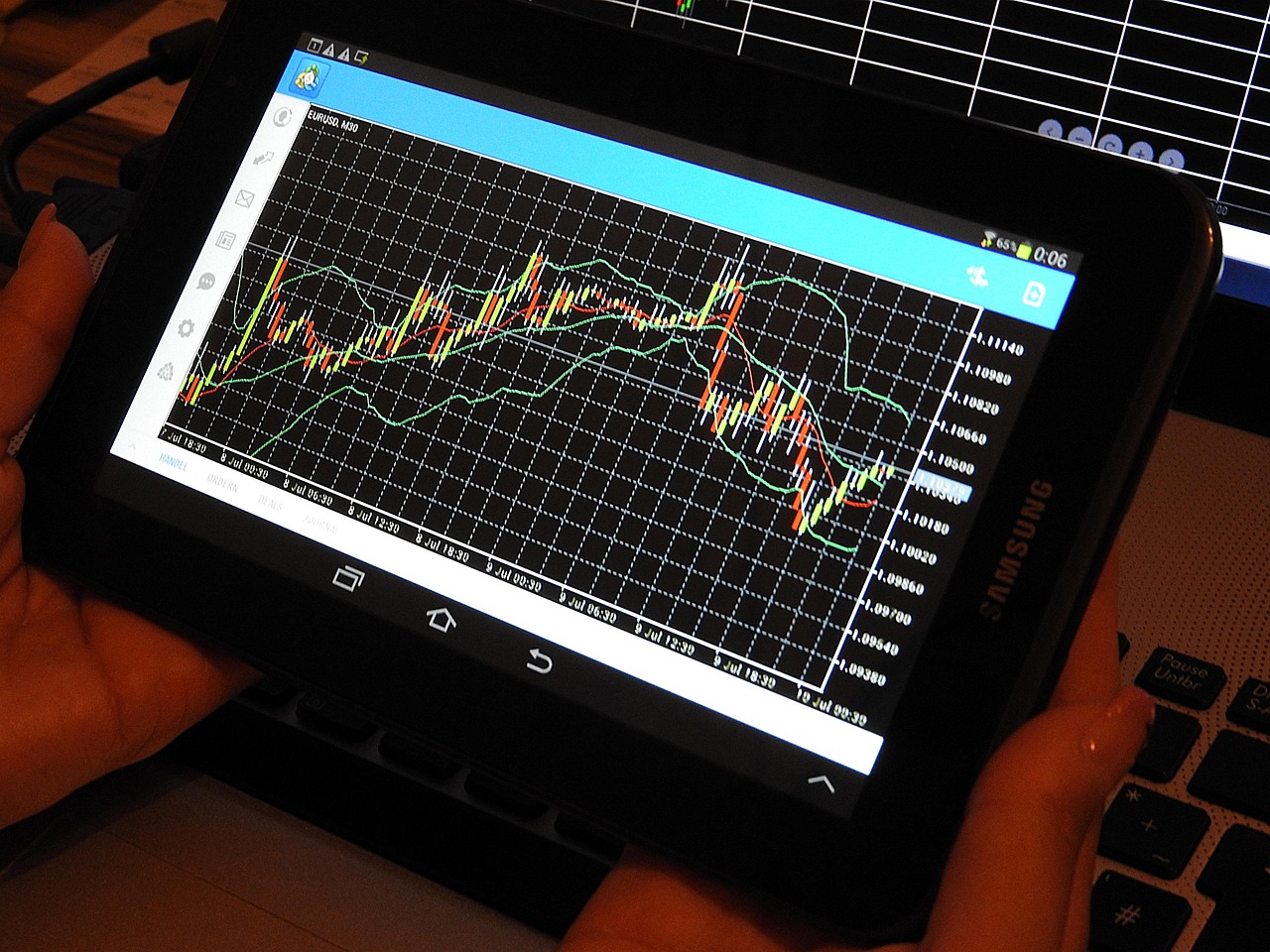
U.S. regulators also stress the risk. The Commodity Futures Trading Commission has warned that many retail forex traders lose money, and its educational material advises traders to use only risk capital and to build a risk management plan. For readers following broader market-control topics, the Trading and Risk section offers related coverage.
The three numbers every forex trade needs
A trade idea is incomplete until it has three measurable numbers: risk per trade, stop distance, and position size. These numbers connect the chart to the account. They also help prevent a common mistake: choosing the position size first, then placing a stop wherever the loss still feels affordable.
Risk per trade
Risk per trade is the maximum account loss if the stop is reached under normal execution. Many disciplined traders use a fixed fraction of equity, such as 0.5% or 1%, rather than a random dollar amount. The exact percentage is a personal decision, but the principle is consistent: the loss should be small enough that several losing trades do not force emotional decisions or emergency deposits.
For example, on a $10,000 account, 1% risk equals $100. If a trader risks 3% per trade, four consecutive losses can reduce the account by more than 11% before spreads, slippage, or rollover costs. A lower fixed risk does not guarantee profitability, but it gives a strategy time to show whether it has an edge.
Stop distance
The stop should be based on the trade thesis, not on the amount of money the trader hopes to risk. If the idea depends on EUR/USD holding above a recent swing low, the stop belongs beyond the level that would disprove that idea. A stop placed too close may reduce dollar risk on paper while increasing the chance of being hit by normal market noise.
Volatility matters. A 25-pip stop may be reasonable during quiet conditions on a major pair, but too tight around a central bank announcement or major inflation release. If the stop must be wider, the position size has to be smaller for account risk to remain constant.
Position size
Position size is the output of the calculation, not the starting point. A simple formula is:
Position size = account dollars at risk ÷ stop distance in pips ÷ pip value per standard lot
If a trader risks $100, uses a 50-pip stop, and the pip value is $10 per standard lot, the position size is 0.20 standard lots, or about 20,000 units. If the stop must widen to 100 pips, the position size falls to 0.10 standard lots. The trade idea may be the same, but the risk-adjusted size changes.
| Account risk | Stop distance | Approximate position on a $10 pip value pair | Planned loss if stopped |
|---|---|---|---|
| $100 | 25 pips | 0.40 standard lots | $100 |
| $100 | 50 pips | 0.20 standard lots | $100 |
| $100 | 100 pips | 0.10 standard lots | $100 |
How leverage changes the risk equation
Leverage allows a trader to control a larger notional position with a smaller deposit. That can make normal currency moves look deceptively small until the position size is considered. Investor.gov, an investor education site associated with the U.S. Securities and Exchange Commission, explains that leverage magnifies both gains and losses and that an unfavorable small move can wipe out the initial deposit in highly leveraged trading.
Margin is not the same as risk. A broker may require a security deposit that is lower than the potential market loss. In the United States, National Futures Association guidance for forex dealer members describes minimum security deposits of 2% of notional value for major currency groups and 5% for other currency transactions, while noting that firms may require more. In practical terms, a 2% deposit corresponds to 50:1 notional exposure. A 5% deposit corresponds to 20:1 exposure.
| Position notional | Security deposit at 2% | 1% adverse price move | Why it matters |
|---|---|---|---|
| $10,000 | $200 | $100 | Half the deposit can be lost on a 1% move |
| $50,000 | $1,000 | $500 | The loss may be larger than a planned daily limit |
| $100,000 | $2,000 | $1,000 | One move can create a major account drawdown |
This is why a leverage limit should be part of the trading plan. A trader may decide never to use the maximum leverage available, or to set lower exposure during central bank decisions, employment reports, inflation data, elections, or unexpected geopolitical headlines.
Build a forex risk plan that can be checked
A useful risk plan is short, written, and measurable. If it cannot be checked after the session, it is probably too vague. The National Futures Association requires forex dealer members to maintain formal risk management programs covering risks such as market risk, liquidity risk, operational risk, counterparty risk, technology risk, and capital risk. Retail traders do not need an institutional policy manual, but they can borrow the same categories.
Market risk
Market risk is the risk that price moves against the position. It is controlled through position sizing, stop placement, maximum exposure, and rules for trading around scheduled events. A plan might state: no new position within 15 minutes of a major data release, no more than 2% total account risk open at one time, and no averaging down unless the second entry was planned before the first trade.
Liquidity and spread risk
Liquidity can change by time of day and by currency pair. Spreads often widen around rollover, market open, late-Friday trading, and surprise news. A trader who sizes a position using a tight stop should ask whether the spread could become a meaningful share of that stop. A five-pip spread is not trivial when the planned stop is only 15 pips.
Correlation risk
Forex trades often overlap. Long EUR/USD, long GBP/USD, and short USD/CHF can all express a similar view on the U.S. dollar. If each trade risks 1%, the combined dollar exposure may be far more than the trader intended. The plan should define whether correlated positions count separately or as one combined risk bucket.
Operational and platform risk
Operational risk includes poor order entry, unstable internet, unfamiliar platform settings, and misunderstanding quote conventions. A trade can fail even when the market analysis is reasonable. Traders should know how their platform handles stop orders, partial closes, margin calls, weekend gaps, and rollover charges before using real capital. See also: Blockchain Technology.
Execution risks traders often overlook
Forex risk management is not limited to chart levels. Execution can change the final result. Bid-ask spreads, commission, slippage, rollover, and order type all affect the true risk-reward profile.
The bid-ask spread is an immediate cost. A strategy that aims for small targets must overcome the spread repeatedly. Investor.gov warns that transaction costs can turn profitable-looking trades into losing transactions, especially for frequent trading or less liquid pairs. That is an execution issue, not just a strategy issue.
Slippage is the difference between the expected price and the execution price. Stops are designed to control risk, but a stop does not always guarantee the exact exit price unless the broker specifically offers a guaranteed stop and explains its cost. Around major events, a position can exit worse than planned.
Rollover is another cost. Spot forex positions held past the broker rollover time may receive or pay financing depending on the currency pair, interest-rate differential, and broker policy. A swing trade with a small expected profit can be affected by several days of negative rollover.
Counterparty risk also matters in off-exchange forex. Retail traders commonly trade through a dealer rather than on a centralized exchange. CFTC and NFA materials advise checking registration status and being cautious of unregistered platforms, unrealistic profit claims, requests for crypto-only deposits, and people who approach through social media, messaging apps, or dating apps.
A practical pre-trade checklist
A checklist turns risk management from an intention into a routine. The goal is not to slow trading unnecessarily; it is to prevent avoidable mistakes when price is moving quickly.
| Question | Why it matters | Acceptable answer before entry |
|---|---|---|
| What is the trade thesis? | Prevents impulsive entries | A clear reason based on trend, range, level, or event |
| Where is the invalidation level? | Defines the stop logically | A price level that disproves the idea |
| How much account equity is at risk? | Controls drawdown | A fixed percentage or dollar amount set before entry |
| What is the position size? | Connects stop distance to account risk | Calculated from risk and stop distance |
| Is there correlated exposure? | Avoids hidden concentration | Total exposure remains within the plan |
| Is a major event near? | Reduces gap and volatility surprises | Trade is delayed, reduced, or intentionally held with smaller size |
| Is the broker or platform risk acceptable? | Protects against avoidable operational errors | Registration, order type, margin rules, and costs are understood |
After the trade, the same checklist becomes a review tool. If a loss followed the plan, it is a normal cost of trading. If the loss came from oversizing, moving a stop, ignoring news, or adding to a losing trade without a rule, the issue is process discipline rather than market prediction.
Common mistakes that weaken forex risk management
The most damaging mistakes are usually simple. First, traders confuse a high win rate with low risk. A strategy can win often and still lose money if the average loss is much larger than the average gain. Second, traders move stops farther away after entry, turning a planned loss into an open-ended decision. Third, traders increase size after a loss in an attempt to recover quickly. That can create a spiral where the largest position is taken when judgment is weakest.
Another mistake is treating demo performance as proof of live readiness. Demo trading is useful for learning order entry and testing structure, but it does not fully reproduce live spreads, slippage, emotional pressure, or the temptation to override rules. A transition from demo to live should start with small size and a focus on execution quality.
Finally, many traders ignore records. A trading journal should include entry, exit, stop, target, position size, risk amount, trade rationale, event context, and whether the plan was followed. Over 30 to 50 trades, the journal can show whether losses come from the strategy, execution, poor timing, or rule-breaking.
Frequently asked questions
What is the most important rule in forex risk management?
The most important rule is to define the maximum loss before entering the trade. That means deciding the stop level, position size, and account percentage at risk before market movement or emotion can influence the decision.
Is a stop-loss enough to manage forex risk?
No. A stop-loss is only one part of risk management. Traders also need position sizing, leverage limits, correlation checks, event awareness, broker due diligence, and rules for daily or weekly loss limits.
How much should a trader risk on one forex trade?
There is no universal number suitable for every trader. Many risk-conscious traders use a small fixed percentage of equity, such as 0.5% or 1%, but the right amount depends on account size, strategy volatility, experience, and ability to tolerate drawdowns.
Why can leverage be dangerous even with major currency pairs?
Major currency pairs may be liquid, but leverage magnifies small price changes. If a trader controls a large notional position with a small deposit, a routine market move can cause a large percentage loss on account equity.
Should forex traders avoid all news events?
Not necessarily. Some strategies are designed around events, while others are harmed by them. The key is to decide in advance whether to avoid, reduce, or intentionally trade through a scheduled release, rather than reacting after volatility begins.