Forex and risk management for leveraged currency trading
a[data-rs-seo-link]{text-decoration:underline!important;color:#1a56db!important;cursor:pointer!important;}a[data-rs-seo-link]{text-decoration:underline!important;color:#1a56db!important;cursor:pointer!important;}
A practical framework for forex and risk management
Forex and risk management have to be treated as one subject because currency trading is usually leveraged, fast moving, and sensitive to macroeconomic news. A risk plan cannot remove uncertainty. Its job is to define how much can be lost, when exposure should be reduced, and which market conditions would invalidate a trade.
For individual traders, the core framework is straightforward: limit risk per trade, size each position from the stop distance, avoid excessive leverage, check correlated exposure, and review results in a written journal. For more risk-focused trading topics, visit the Trading and Risk section.
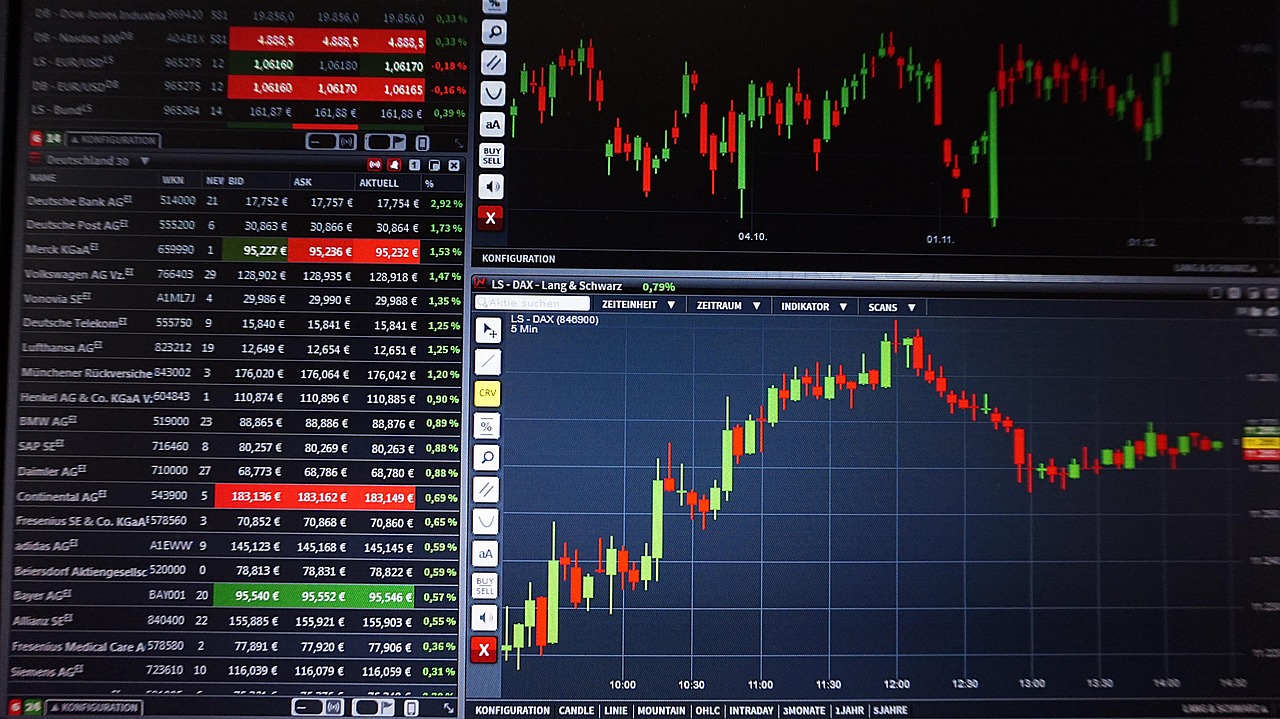
The foreign exchange market is large, but size does not make it safe. The Bank for International Settlements reported in its 2025 Triennial Central Bank Survey that global FX turnover reached about $9.6 trillion per day in April 2025, up from 2022. That depth can support execution in major pairs, but it also sits alongside leveraged speculation, short-term volatility, and operational risk. The practical question is how to build a risk process around those conditions.
Why forex risk is different from simple price direction risk
Many new traders define risk as being wrong about direction. In forex, that is only part of the problem. A trader can identify the broader trend correctly and still lose money because of poor entry timing, oversized lots, widening spreads, slippage during news, or several open trades that all depend on the same currency move.
Forex is also a relative market. EUR/USD is not only a euro trade; it is also a U.S. dollar trade. GBP/JPY is not only a British pound idea; it carries yen exposure and may behave differently when global risk sentiment shifts. Because every pair contains two currencies, a group of trades that appears diversified can quietly become one large macro position.
Regulators repeatedly warn that retail off-exchange forex is high risk. U.S. agencies including the Commodity Futures Trading Commission, the North American Securities Administrators Association, and Investor.gov have highlighted the dangers of leverage, fraud, and the absence of a central marketplace in retail off-exchange trading. That does not mean every forex trade should be avoided. It means risk control should be addressed before trade selection.
The main risks every forex trader should map before entering a trade
A useful risk plan names the type of risk before choosing the control. The table below can be used as a practical pre-trade checklist.
| Risk area | Key question | Practical control |
|---|---|---|
| Market risk | How much can price move against the setup? | Use a predefined stop and calculate position size from that stop. |
| Leverage risk | How much notional exposure is being controlled by account equity? | Set a maximum account leverage level and reduce size before major news. |
| Liquidity and spread risk | Could spreads widen or execution worsen? | Avoid oversized trades near illiquid sessions, holidays, and high-impact releases. |
| Correlation risk | Are several trades dependent on the same currency or theme? | Group positions by currency exposure and cap total risk across related trades. |
| Event risk | Is a central bank, inflation, jobs, or geopolitical event due? | Plan whether to hold, reduce, hedge, or avoid exposure before the event. |
| Operational risk | Can the platform, broker, order type, or connection fail? | Use reputable regulated counterparties, test orders, and maintain backup access. |
| Behavioral risk | Will emotion override the plan? | Use fixed rules for loss limits, trade frequency, and post-loss pauses. |
This structure is close to the way professional risk programs think about exposure. The National Futures Association has described forex dealer risk management as covering market, credit, liquidity, foreign currency, legal, operational, counterparty, technological, capital, and related risks. Retail traders do not need institutional infrastructure, but they can apply the same discipline of naming the risk before taking it.
Position sizing should come before the trade idea
Position sizing is the link between analysis and capital preservation. A trader who risks too much can be damaged by an ordinary losing streak. A trader who sizes reasonably has a better chance of surviving long enough to judge whether the strategy has an edge.
A common process is to define account risk first. For example, if a trader has a $10,000 account and chooses to risk 1% on a trade, the maximum planned loss is $100. If the trade requires a 25-pip stop and the pip value is $10 per pip for one standard lot, the position would be calculated as:
Position size equals dollar risk divided by the stop distance multiplied by the pip value per standard lot. In this example, $100 divided by 25 pips multiplied by $10 per pip equals 0.4 standard lots. This is not a recommendation to trade that size. It shows the logic: the stop distance and dollar risk determine the position, not confidence, frustration, or excitement.
Traders should also distinguish between risk per trade and risk per idea. If three trades all benefit from a weaker U.S. dollar, risking 1% on each may create a 3% dollar view rather than three separate risks. The same issue appears when traders hold several yen crosses, commodity-linked currencies, or pairs that tend to react to the same central bank theme.
Leverage can be useful, but it changes the survival math
Leverage is one reason forex attracts traders. It allows a smaller account to control a larger notional position. The danger is that leverage makes small price movements meaningful to account equity. A move that looks modest on a chart can become a large percentage loss if the position is too large.
In the United States, CFTC materials warn investors about firms offering leverage higher than legally allowed. The CFTC describes the U.S. retail forex minimum security deposit as 2% for major currency pairs and 5% for other pairs, often expressed as roughly 50:1 and 20:1 maximum leverage. Rules vary by jurisdiction, and traders should verify the requirements that apply to their location before opening an account.
Good risk management treats broker-available leverage as a ceiling, not a target. A platform may allow high notional exposure, but a trading plan can set a much lower internal limit. For example, a trader might decide that total open exposure should not exceed a fixed multiple of account equity, or that no new position can be added if unrealized losses exceed a daily threshold.
Margin calls and forced liquidations are risk events in their own right. A stop-loss order is not a complete solution if the market gaps, spreads widen, or execution is delayed during a major release. That is why leverage control and event planning matter even when every trade has a stop.
Stop-loss placement should reflect market structure, not only comfort
A stop is not only a line that limits loss. It is a statement about the trade thesis. If a long trade is based on a higher-low structure, the stop should usually sit where that structure is invalidated, not at a random dollar amount. If a breakout trade depends on price holding above a level, the invalidation point should be tied to that level and the normal volatility around it.
This creates an important discipline. If the technically logical stop makes the position too expensive, the answer is not to move the stop closer without a market-based reason. The better response is to reduce position size, wait for a better entry, or skip the trade. Tight stops can control loss per trade, but stops that are too tight for the pair and timeframe can produce repeated small losses without improving the strategy. See also: Blockchain Technology.
Traders can also use volatility measures such as average true range, recent session ranges, or event-driven spread history to avoid placing stops inside normal market noise. This is especially important for pairs that behave differently across sessions. EUR/USD liquidity is usually strongest during the London and New York overlap, while some crosses can be more vulnerable to spread changes outside their active hours.
Event, correlation, and weekend risk need separate limits
Forex risk often rises around scheduled and unscheduled events. Central bank decisions, inflation data, labor market releases, fiscal announcements, elections, geopolitical shocks, and trade policy headlines can all change expected interest-rate paths or risk sentiment. The 2025 BIS survey period, for example, coincided with elevated FX activity around major policy and market developments, showing how quickly macro events can concentrate turnover.
A practical event-risk plan should answer four questions before the event arrives:
- Will the position be closed, reduced, hedged, or left unchanged?
- What maximum loss is acceptable if the market gaps through the stop?
- Is the trade based on the event outcome, or is the event an unwanted risk to an existing setup?
- Will spreads and liquidity conditions be acceptable for the order type being used?
Correlation risk needs a separate rule because it can hide inside an account that appears diversified. Long EUR/USD, long GBP/USD, and short USD/CHF can all express a bearish U.S. dollar view. Long AUD/JPY and long NZD/JPY can both depend on risk appetite and yen weakness. Exposure should be reviewed by currency and macro theme, not only by pair.
Weekend risk also deserves attention. Currency markets close for most retail traders over the weekend, but political and geopolitical events do not stop. If the market opens far from Friday levels, stops may not execute at the expected price. Traders who hold positions over weekends should size them with gap risk in mind.
How to turn risk rules into a repeatable trading plan
A forex risk plan works only if it is written, measurable, and reviewed. Vague rules such as be careful with leverage are too easy to ignore. Stronger rules define numbers and actions.
A basic plan can include:
- Maximum risk per trade, such as a fixed percentage of account equity.
- Maximum total open risk across all positions.
- Maximum daily or weekly loss before trading stops.
- Maximum exposure to one currency or one macro theme.
- Rules for trading around high-impact economic releases.
- Approved order types and conditions for using market orders.
- Broker and counterparty checks, including registration or regulatory status where applicable.
- A review process for screenshots, entries, exits, slippage, and emotional mistakes.
The review process is where risk management improves. A trader should separate bad outcomes from bad decisions. A planned loss within the rules is part of trading. A profitable trade that ignored the stop, doubled down, or exceeded risk limits is still a process failure. Over time, the goal is to reduce avoidable errors rather than to win every trade.
It is also useful to record the planned risk-reward ratio and the actual result. If trades are consistently closed early for small profits and allowed to hit full stops, the written edge may not match actual behavior. If slippage is frequent around news, the strategy may need a different execution rule. If most losses occur after a daily loss limit has already been reached, the problem is discipline, not chart analysis.
Frequently asked questions
What is the most important rule in forex risk management?
The most important rule is to decide the maximum acceptable loss before entering a trade and to size the position from that number. Directional analysis matters, but position sizing determines whether a normal losing trade becomes a manageable loss or a major account setback.
How much should a forex trader risk per trade?
There is no universal percentage that fits every trader, account size, strategy, or risk tolerance. Many educational discussions use small fixed percentages as examples, but each trader should choose a level that accounts for strategy volatility, losing streaks, leverage, and personal financial circumstances.
Does a stop-loss order remove forex risk?
No. A stop-loss can define the planned exit, but execution may differ during gaps, fast markets, illiquid periods, or news events. Stops are necessary for many strategies, but they should be supported by leverage limits, event rules, and realistic assumptions about slippage.
Why is correlation important in forex trading?
Correlation matters because several currency pairs can express the same underlying view. A trader may think they have five separate trades, while the account is heavily exposed to one currency, one central bank theme, or one risk-sentiment move.
Is forex risk management different for beginners?
The principles are the same, but beginners usually need stricter limits because they are still learning execution, platform behavior, spreads, and emotional discipline. Smaller position sizes and fewer simultaneous trades make it easier to identify mistakes and improve the process.
The bottom line
Forex trading is not only a prediction exercise. It is a risk allocation process in a leveraged global market. The strongest risk plan is usually consistent rather than complex: define the loss before the trade, size the position from the stop, control leverage, measure correlated exposure, prepare for events, and review results honestly. Traders who put risk management at the center of the process give themselves a better chance to withstand uncertainty and evaluate their strategy over time.