How the digital assets market is changing in 2026

a[data-rs-seo-link]{text-decoration:underline!important;color:#1a56db!important;cursor:pointer!important;}a[data-rs-seo-link]{text-decoration:underline!important;color:#1a56db!important;cursor:pointer!important;}
The digital assets market in 2026 is no longer defined only by bitcoin price moves or speculative token launches. It now covers a wider financial stack: crypto assets, stablecoins, tokenized funds, tokenized equities and on-chain settlement tools. CoinGecko data checked on September 21, 2026 showed global crypto market capitalization at roughly $3 trillion, stablecoins near $307 billion, and bitcoin still representing close to 58% of total crypto value. The scale is significant, but the larger shift is structural. Regulated access products, payment stablecoins and tokenization are pulling parts of the digital assets market closer to traditional market infrastructure. For more coverage of this sector, see our Digital Assets section.
What the digital assets market includes now
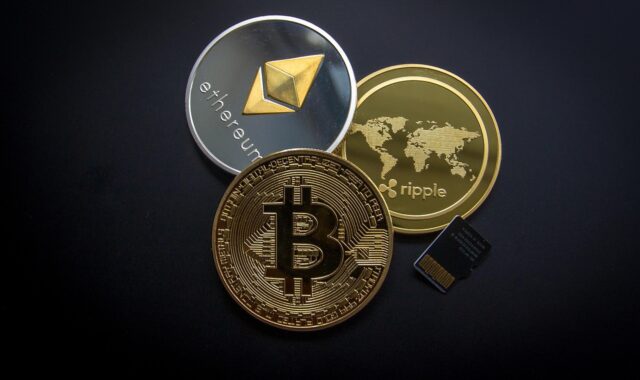
The term digital assets market has broadened. In earlier crypto cycles, it often meant bitcoin, ether and a long list of exchange-traded tokens. In 2026, a more practical definition includes at least four categories.
- Crypto assets: bitcoin, ether and other blockchain-native tokens that trade on centralized or decentralized venues.
- Stablecoins: tokens designed to maintain a stable value against a reference asset, usually the U.S. dollar, and used for trading liquidity, payments and treasury movement.
- Tokenized real-world assets: on-chain representations of assets such as money market funds, bonds, commodities, equities and exchange-traded funds.
- Market infrastructure: custody, settlement, compliance, on-chain trading venues, data systems, wallets and risk controls that allow institutions to interact with digital assets.
This wider definition changes the search intent behind the topic. Readers are not only asking whether crypto prices are rising or falling. They also want to know which parts of the market are becoming durable, which remain experimental, and how regulation affects adoption.
Market size shows recovery, but not a simple bull market
Recent data points show why the 2026 digital assets market is hard to summarize with one headline. CoinGecko reported that total crypto market capitalization fell 12.6% during the second quarter of 2026, ending June at about $2.1 trillion. The same report said average daily trading volume fell 20.9% quarter over quarter to $93.1 billion, while centralized exchange spot volume declined 27.9% to $1.95 trillion for the quarter.
By September 21, 2026, CoinGecko’s live market page showed the market back near $3 trillion. That rebound does not erase the earlier drawdown. It points to a market that remains liquid and globally active, but still highly sensitive to macro rates, risk appetite, ETF flows, geopolitical stress and leverage.
| Indicator | Recent figure | Why it matters |
|---|---|---|
| Total crypto market capitalization | About $3 trillion on September 21, 2026, according to CoinGecko | Shows the sector remains large enough to matter to financial markets, even after volatility |
| Bitcoin share | About 58% of total crypto market value | Highlights market concentration and bitcoin’s continuing role as the benchmark asset |
| Stablecoin market capitalization | About $307 billion on September 21, 2026 | Shows the importance of dollar-linked liquidity inside crypto markets |
| Tokenized RWA market | $19.32 billion as of March 31, 2026, according to CoinGecko’s RWA report | Shows fast growth from a small base compared with stablecoins and crypto assets |
The main point is that the market has become more layered. Crypto prices can weaken while stablecoin infrastructure, tokenized collateral systems or institutional custody standards continue to develop.
Three forces reshaping market structure
Regulated access products are changing how investors get exposure
The U.S. Securities and Exchange Commission approved spot bitcoin exchange-traded products on January 10, 2024. It later approved exchange rule changes for ether-based exchange-traded products on May 23, 2024, and spot ether products began trading in the United States in July 2024. Those dates still matter because they moved part of crypto exposure into familiar brokerage and exchange-traded fund channels.
This does not mean exchange-traded products remove digital asset risk. They can reduce some access and custody frictions for investors, but the underlying assets remain volatile. They also create new feedback loops: inflows and outflows from regulated products can affect liquidity, sentiment and short-term price pressure.
Stablecoins are becoming a payment and treasury tool
Stablecoins were once viewed mainly as trading pairs on crypto exchanges. In 2026, they are increasingly discussed as programmable cash for settlement, cross-border transfers and treasury operations. A Coinbase and EY institutional investor survey published in 2026 said 85% of respondents were using, or interested in using, stablecoins for internal cash management and money movement. Because the survey reflects a specific institutional sample, it should not be read as a measure of the whole market. Still, it supports a broader trend: institutions are treating stablecoins as infrastructure, not only as crypto trading chips.
Stablecoin growth also raises policy concerns. Reserve quality, redemption rights, issuer supervision, sanctions compliance and operational resilience matter because a large stablecoin is effectively a bridge between banking liquidity and blockchain settlement. This is why stablecoin regulation has moved faster than many other crypto rules.
Tokenization is moving from concept to limited deployment
Tokenization is the process of representing claims on assets through blockchain-based records. Supporters argue that it can make issuance, transfer, settlement and ownership records more efficient. Regulators and market participants are testing that claim carefully because tokenized assets can involve securities law, custody law, transfer-agent requirements and investor-protection rules.
CoinGecko’s 2026 RWA report estimated that tokenized real-world asset market capitalization increased from $5.42 billion at the start of 2025 to $19.32 billion on March 31, 2026, a 256.7% increase. That is rapid growth, but context matters: the report also said tokenized RWAs were still only 6.4% of the stablecoin market’s size. In tokenized equities, CoinGecko noted that trading activity for leading tokenized stocks remained less than 1% of the trading volume of their traditional stock-market counterparts.
In other words, tokenization is real, but it is not yet a wholesale replacement for traditional securities markets.
Regulation is becoming a competitive factor
Regulation is no longer just a background risk for digital assets. It is becoming part of market design. In the European Union, the Markets in Crypto-Assets Regulation, known as MiCA, applied to asset-referenced tokens and e-money tokens from June 30, 2024, and became fully applicable from December 30, 2024. That gave the EU a comprehensive framework for crypto-asset issuers and crypto-asset service providers.
In the United States, the GENIUS Act was signed into law on July 18, 2025, according to White House and GovInfo records. The law created a federal framework for payment stablecoins. That was a major development because stablecoins had become too large to remain governed mostly by fragmented state, banking and enforcement-based approaches.
The U.S. market structure debate remains unsettled. The Associated Press reported that on September 15, 2026, the Senate blocked a vote to move forward on broad cryptocurrency market-structure legislation by 49 to 50. Supporters described the bill as a path toward legal certainty and consumer protection, while opponents raised concerns about industry influence and ethics rules. The result shows that stablecoin rules can advance while broader spot-market legislation remains politically difficult. See also: Blockchain Technology.
There are also signs that regulators are testing more targeted approaches. On September 17, 2026, an SEC statement said the Commission had approved a temporary, conditional Innovation Exemption to allow limited trading of tokenized National Market System stocks on certain on-chain venues. That is not a blanket approval of tokenized securities markets. It is a controlled policy experiment, and its importance depends on how the conditions, oversight and market response develop.
What investors and operators should watch
For investors, the main challenge is separating price momentum from infrastructure adoption. A token can rally without building durable utility. A settlement tool can gain institutional usage without producing a simple retail investment thesis. The following signals are more useful than short-term hype.
- Liquidity quality: Watch spreads, market depth, redemption processes and the difference between reported volume and executable volume.
- Custody and control standards: The 2026 Coinbase and EY survey said 66% of respondents cited regulatory compliance as a key factor in selecting a custodian, up from 25% in 2025. It also said security and key-signing protocols rose sharply as a selection factor.
- Stablecoin reserve transparency: The safest-looking stablecoin interface can still depend on issuer reserves, redemption rights and operational processes.
- Regulatory perimeter: Whether an asset is treated as a commodity, security, payment stablecoin, fund interest or tokenized security can determine who may issue, trade or custody it.
- Real adoption versus pilot activity: Tokenization announcements should be judged by assets under management, secondary liquidity, eligible investor base and settlement benefits that can be measured.
Operators face a related issue. The market rewards speed, but financial institutions need governance. That means compliance systems, wallet controls, audit trails, sanctions screening, cybersecurity, business continuity and clear responsibility for smart-contract risk.
Risks and limits in the next phase
The digital assets market has matured, but maturity does not remove risk. Volatility remains the first risk. CoinGecko’s second-quarter data showed that large market-cap drawdowns can still happen quickly, even in a market with ETFs, stablecoins and institutional participants.
Concentration is another limitation. Bitcoin remains the dominant asset by value, and leading stablecoins account for a large share of settlement liquidity. Concentration can improve liquidity in normal markets, but it can also amplify stress when confidence in a major asset, issuer or venue weakens.
Tokenization carries its own risks. A tokenized asset is not automatically safer or more liquid than the asset it represents. Investors still need to understand the legal claim, the issuer, the custodian, transfer restrictions, settlement finality, oracle design and what happens if the blockchain, smart contract or platform fails.
Finally, regulation can reduce uncertainty, but it can also fragment markets. MiCA, the GENIUS Act and U.S. securities rules do not create one global rulebook. Global firms still have to manage jurisdiction-by-jurisdiction requirements, especially where tokens trade around the clock across borders.
Frequently asked questions
What is the digital assets market?
The digital assets market is the financial ecosystem for blockchain-based or digitally represented assets. It includes cryptocurrencies, stablecoins, tokenized real-world assets, digital asset custody, trading venues, settlement networks and related compliance infrastructure.
Is the digital assets market the same as the crypto market?
No. Crypto assets are a major part of the market, but the wider digital assets market also includes stablecoins, tokenized securities, tokenized funds, on-chain payment tools and infrastructure used by institutions.
Why are stablecoins important in 2026?
Stablecoins are important because they provide dollar-linked liquidity for trading, payments and treasury movement. Their growth has also pushed regulators to focus on reserves, redemption rights, issuer supervision and operational resilience.
Is tokenization already mainstream?
Tokenization is growing quickly from a small base, but it is not yet mainstream across most traditional markets. Data from 2026 shows tokenized real-world assets expanding, while tokenized equities and tokenized ETFs remain small compared with their traditional counterparts.
What is the biggest issue to watch next?
The biggest issue is whether regulation, custody and liquidity can develop fast enough to support real institutional use without weakening investor protection. Price cycles will continue, but market structure may matter more for long-term adoption.