Money and risk management in trading for crypto and leveraged markets

a[data-rs-seo-link]{text-decoration:underline!important;color:#1a56db!important;cursor:pointer!important;}a[data-rs-seo-link]{text-decoration:underline!important;color:#1a56db!important;cursor:pointer!important;}
Money and risk management in trading sets the amount of capital that can be lost, the conditions for reducing exposure, and the points where no trade should be taken. It does not forecast the next candle. Its job is to keep the account intact when a trade idea fails, liquidity thins out, or leverage turns a normal price move into a material loss. In crypto and other active markets, that means defining risk before entry, sizing from the stop or invalidation point, limiting correlated exposure, and reviewing losses before adding size. The rules below apply to spot crypto, futures, options, equities, and other leveraged instruments.
Why money management comes before market opinion
A strong market view can still become a poor trade if the position is too large, the stop is unrealistic, or the trader cannot withstand a normal losing streak. Money management answers a narrow but critical question: how much can be lost if the setup fails? Risk management asks the wider question: what else can go wrong beyond the chart?
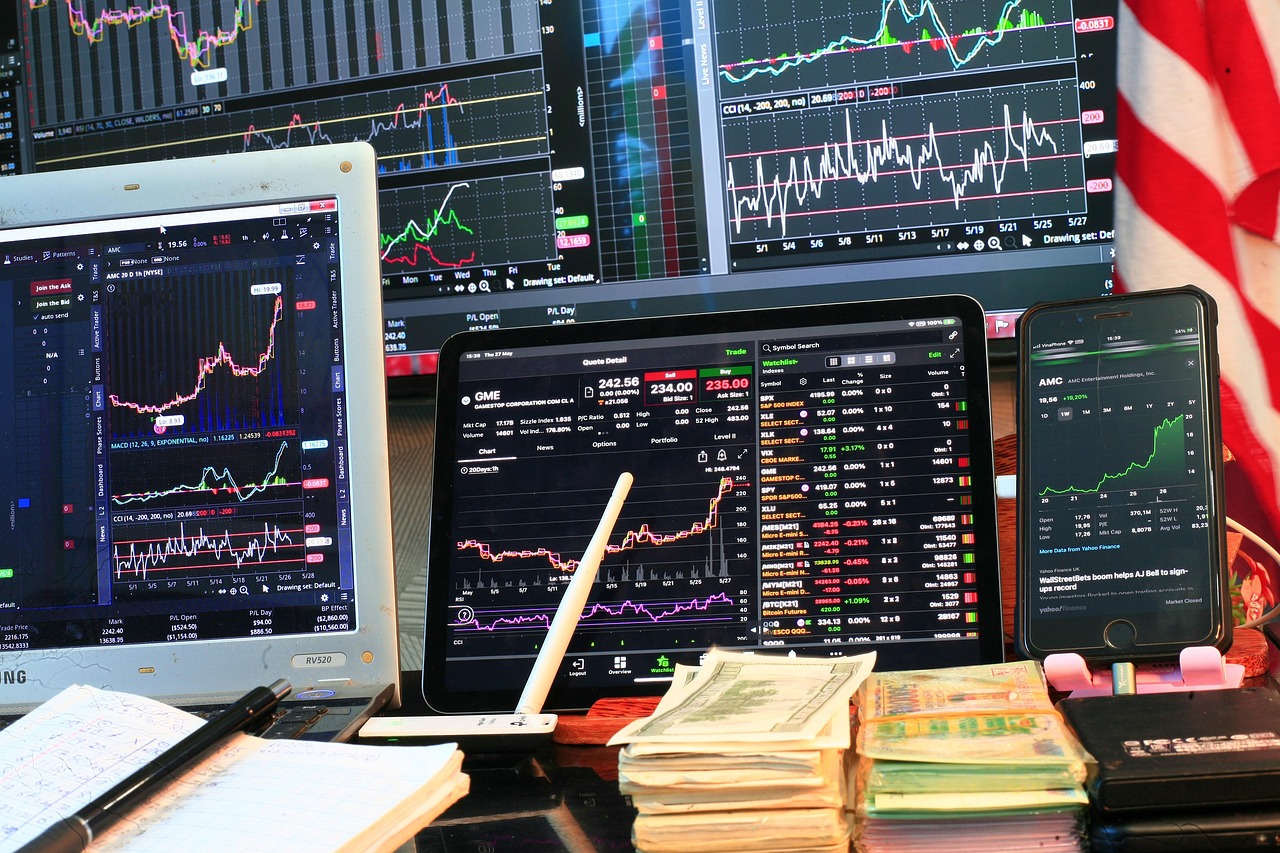
The two areas overlap, but they are not identical. Money management covers account allocation, position sizing, cash reserves, maximum daily loss, and drawdown limits. Risk management also includes leverage, order execution, liquidity, custody, exchange risk, regulatory constraints, operational errors, and fraud red flags. A complete trading plan needs both.
For readers comparing broader market-risk topics, the site’s Trading and Risk section can be used as a starting point for related strategy and risk-control discussions.
Set a risk budget before calculating position size
The first number in a trading plan should not be the profit target. It should be the maximum acceptable loss. Many active traders use a fixed percentage of account equity per trade, such as 0.5%, 1%, or 2%. The right figure depends on experience, volatility, strategy frequency, and whether the instrument can gap, liquidate, or become difficult to exit. The purpose is not to make losses comfortable. It is to prevent one bad trade from becoming a portfolio-level problem.
A simple position-sizing formula is:
Position size = account dollars at risk ÷ distance from entry to invalidation
If a $10,000 account risks 1% on a trade, the dollar risk is $100. If the trade is invalidated $2 below the entry price, the theoretical position size is 50 units before fees, slippage, funding, spreads, and taxes. If the invalidation point is $5 away, the same $100 risk allows only 20 units. This is why position size should adjust to the setup, not to confidence alone.
| Risk per trade | Dollar risk on $10,000 | Approximate account loss after 10 consecutive losses if risk resets to current equity |
|---|---|---|
| 0.5% | $50 | 4.9% |
| 1% | $100 | 9.6% |
| 2% | $200 | 18.3% |
| 5% | $500 | 40.1% |
The table shows why small differences in risk per trade matter. A trader risking 5% per trade needs only a short losing streak to face a deep drawdown. A trader risking 1% still takes losses, but remains in a better position to assess the strategy without the same emotional pressure.
Leverage changes the meaning of a small move
Leverage is attractive because it increases exposure without requiring the full notional amount upfront. It is dangerous for the same reason. A 2% market move is no longer small if the position is leveraged 10 times and the trader has not planned for margin calls, liquidation thresholds, funding costs, or forced exits.
Public investor guidance from SEC Investor.gov warns that margin accounts can expose investors to losses larger than the amount initially invested. The same guidance explains that brokerage firms may be able to sell securities in a margin account without first consulting the customer when equity becomes insufficient. This matters because a trader using margin is not only managing price direction; the trader is also operating under the broker’s collateral rules.
U.S. active traders should also pay attention to the 2026 shift in intraday margin standards. FINRA Regulatory Notice 26-10, published on April 20, 2026, adopted new intraday margin standards that replace the older pattern day trader framework, including the trade-count designation and the $25,000 minimum equity requirement. The amendments became effective on June 4, 2026, while firms that need more time may phase in implementation until October 20, 2027. As of November 14, 2026, traders should not assume every brokerage platform applies the transition in the same way; checking the firm’s own margin procedures remains necessary.
For crypto derivatives, leverage can be even less forgiving because markets trade continuously, liquidity can change quickly, and liquidation engines may close positions automatically. The CFTC has repeatedly warned that leverage amplifies risk in virtual currency futures and other derivatives. A practical rule is to treat leverage as a risk multiplier, not as extra buying power to be fully used.
Crypto risk includes more than price volatility
Crypto traders often focus on volatility, but volatility is only one layer of risk. The CFTC has noted that virtual currency markets can involve cash-market price swings, flash crashes, manipulation concerns, cyber risks, and platform safeguards that may differ from regulated securities markets. SEC Investor.gov also highlights custody choices: direct crypto ownership may require self-custody with private keys, while third-party custody introduces reliance on another entity’s controls and terms.
A crypto risk plan therefore needs to answer questions that do not appear on a standard price chart:
- Is the position in spot crypto, a futures contract, an option, an exchange-traded product, or a token with limited liquidity?
- Where is the asset held, and what happens if withdrawals are paused?
- How wide can the spread become during market stress?
- Could the position be liquidated automatically before the broader trade thesis has time to play out?
- Are multiple positions exposed to the same driver, such as bitcoin direction, dollar liquidity, exchange-token sentiment, or a single ecosystem?
- Are fees, funding rates, and borrowing costs included in the expected return calculation?
Fraud risk deserves separate attention. CFTC digital asset fraud guidance identifies common patterns such as trading platform frauds, pump-and-dump schemes, Ponzi-style promises, fake urgency, and claims of guaranteed returns. A risk management plan should reject any strategy or platform that depends on secrecy, pressure, unrealistic returns, or paying additional money to withdraw supposed profits.
Use stops, invalidation, and exposure limits together
A stop-loss order is not a complete risk management system. Stops can slip, fail to execute at the intended price, or be triggered by short-term noise. Still, a preplanned exit level is useful because it forces the trader to define where the original idea no longer makes sense. See also: Blockchain Technology.
In practice, a stronger framework combines three levels of control:
- Trade-level control: Define entry, invalidation, position size, expected slippage, and maximum dollar loss before placing the order.
- Account-level control: Set a maximum daily, weekly, or monthly loss that stops new trading when reached.
- Portfolio-level control: Limit total exposure to correlated assets, sectors, exchanges, and strategies.
Risk-reward ratios can help, but they should not be used mechanically. A trade with a 3:1 target-to-risk ratio can still be poor if the probability of reaching the target is low or if the stop is placed at an obvious liquidity point. Conversely, a lower ratio may be acceptable in a strategy with a high win rate and controlled losses. The more useful measure is expectancy: average win multiplied by win rate, minus average loss multiplied by loss rate, after all costs.
Traders should also separate technical invalidation from emotional discomfort. A position should not be closed merely because it is temporarily red if it remains within the planned risk. It also should not be held after invalidation simply to avoid realizing the loss. The plan must be written before the trade, when decision quality is usually higher.
Drawdown control protects decision quality
Drawdowns create two problems. The first is mathematical: the deeper the loss, the larger the percentage gain needed to recover. The second is behavioral: traders under pressure often increase size, abandon setups, overtrade, or move stops to avoid closing a loser.
| Account drawdown | Gain needed to recover to breakeven |
|---|---|
| 10% | 11.1% |
| 20% | 25.0% |
| 30% | 42.9% |
| 50% | 100.0% |
This recovery math is one reason professional risk processes often include circuit breakers. A trader might reduce size by half after a 5% account drawdown, stop trading for the day after losing 2%, or pause a strategy after a defined number of rule-based losses. The specific thresholds vary, but the principle is consistent: lower risk when evidence suggests execution quality or market fit has deteriorated.
A trading journal can turn losses into useful data. At minimum, record the setup, entry, exit, planned risk, actual loss or gain, slippage, fees, market condition, and whether rules were followed. Over time, the journal should show whether losses come from normal variance, poor entries, excessive leverage, bad timing, correlated exposure, or rule-breaking.
A practical pre-trade checklist
Before placing a trade, the following checklist can reduce avoidable mistakes:
- What is the exact invalidation point?
- How many dollars will be lost if the stop executes at the planned level?
- What happens if execution is worse than expected?
- Is the position size based on risk, or on the desire to make back previous losses?
- Does leverage create a liquidation risk before the invalidation point?
- Are other open positions exposed to the same market driver?
- Is the trade being entered during a scheduled event, thin liquidity window, or high-volatility period?
- Are all fees, spreads, funding rates, and borrowing costs included?
- Is the platform, wallet, or broker suitable for the size and instrument being traded?
- What rule requires the trader to stop for the day?
If the checklist produces unclear answers, the trade is not ready. Not trading is a valid risk decision, especially in crypto markets where volatility can create the impression that every move must be chased.
Frequently asked questions
Is the 1% rule enough for trading risk management?
No single percentage is enough by itself. Risking 1% per trade can be a useful starting point, but traders still need controls for leverage, liquidity, correlation, slippage, drawdown, platform risk, and emotional decision-making. A 1% rule applied to too many correlated trades can still create excessive portfolio risk.
Should crypto traders avoid leverage completely?
Not always, but leverage should be used only when the trader understands liquidation mechanics, funding costs, margin requirements, and worst-case execution. For many newer traders, spot exposure or very low leverage is more suitable than high-leverage derivatives because it reduces the chance of forced liquidation.
Does a stop-loss guarantee the planned exit price?
No. A stop order may execute at a worse price during gaps, fast markets, or thin liquidity. This is especially relevant in crypto and small-cap assets. Position sizing should allow for slippage rather than assuming a perfect exit.
How do the 2026 U.S. intraday margin changes affect active traders?
FINRA’s 2026 amendments replace the older pattern day trader framework with intraday margin standards, but firms may phase in implementation until October 20, 2027. Traders should verify how their own broker applies margin monitoring, restrictions, and deficit procedures during the transition.
What is the main goal of money and risk management?
The goal is survival with discipline. A trader cannot control market outcomes, but can control position size, leverage, exposure, entry conditions, exits, and when to stop trading. Good risk management keeps losses small enough that the next valid opportunity still matters.