Digital crypto assets explained for investors and market observers
a[data-rs-seo-link]{text-decoration:underline!important;color:#1a56db!important;cursor:pointer!important;}a[data-rs-seo-link]{text-decoration:underline!important;color:#1a56db!important;cursor:pointer!important;}
What digital crypto assets mean now
Digital crypto assets are blockchain-based representations of value, rights or access that can be issued, transferred or recorded through distributed ledger technology. The term reaches beyond cryptocurrencies. It can include payment stablecoins, tokenized securities, governance tokens, collectibles, protocol tokens and digital representations of real-world assets.
For investors and market observers, the useful question is no longer simply whether an asset is “crypto.” The better questions are what the asset represents, who is responsible for it, how it is used, how it is held, and which legal or market rules apply. That distinction matters as regulators in the United States, the European Union and global standard-setting bodies move toward clearer classifications for digital asset markets.
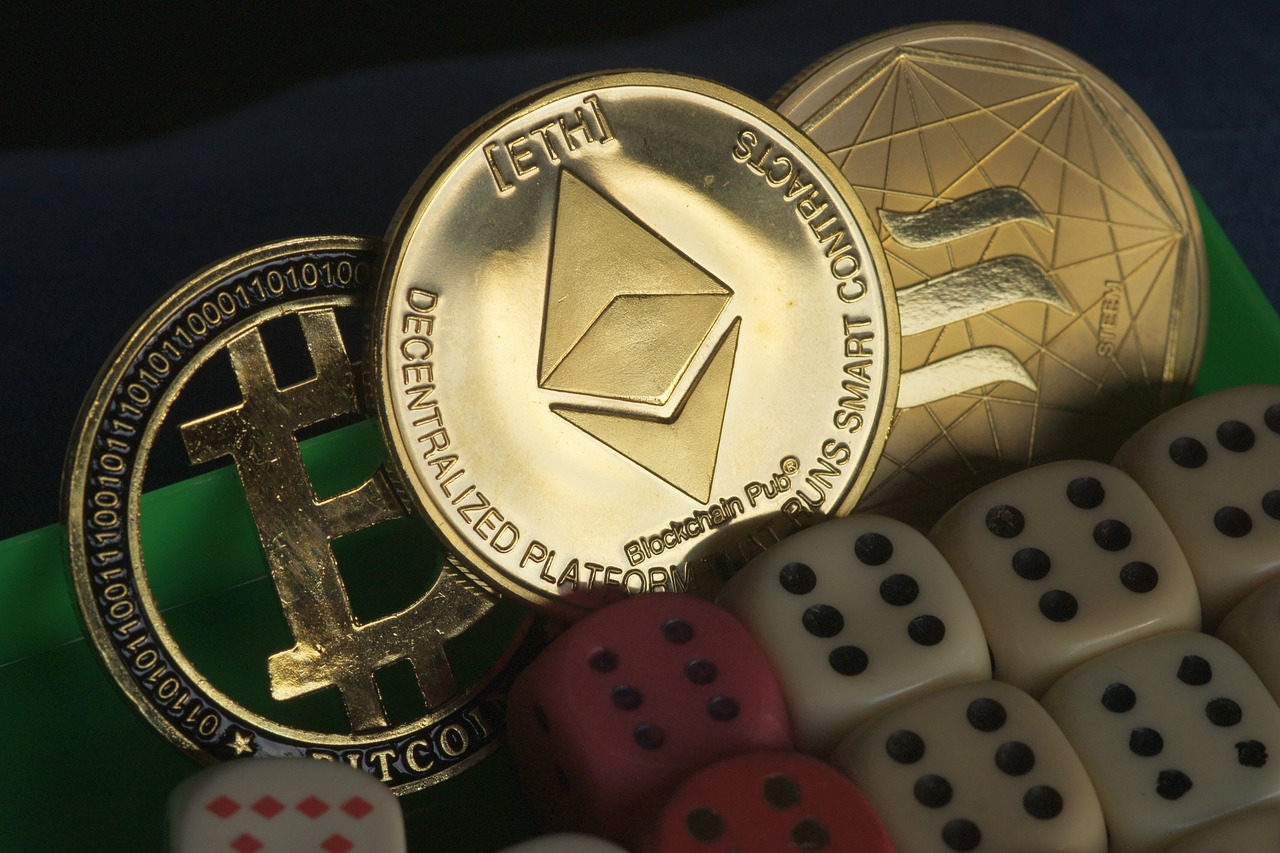
This guide is intended for readers following the Digital Assets market. It focuses on terminology, asset categories, regulatory direction and risk signals rather than price forecasts.
Digital asset, crypto asset and token are related but not identical
The terms used in this market often overlap, but they are not always interchangeable. A digital asset is the broadest phrase. It can refer to almost any asset represented in digital form. A crypto asset is generally a digital asset that is generated, issued, transferred or recorded using a blockchain or similar distributed ledger. A token is a unit created on a network or smart contract system and may represent access, ownership, voting power, payment value or another set of rights.
The U.S. Securities and Exchange Commission has described crypto assets as digital representations of value recorded on cryptographically secured distributed ledgers. That definition is intentionally broad because asset design varies widely. A token used only to pay network fees has a different profile from a tokenized share, a dollar-referenced stablecoin or a collectible tied to a specific digital file.
Labels can therefore be misleading. Calling something a coin, utility token, digital commodity or non-fungible token does not, by itself, determine its economic function or legal treatment. Market participants still need to examine the substance of the asset, the transaction and the promises made to buyers.
Main categories of digital crypto assets
A practical taxonomy helps readers avoid treating the market as one undifferentiated sector. The categories below are simplified, but they capture the main differences that matter for research and due diligence.
| Category | Typical purpose | Key questions to ask |
|---|---|---|
| Native network assets | Used for transaction fees, network incentives or settlement within a blockchain ecosystem. | Is the network functional, secure, liquid and decentralized enough for its stated purpose? |
| Payment stablecoins | Designed to maintain a stable value against a reference asset, often the U.S. dollar. | What reserves back the token, how does redemption work, and who supervises the issuer? |
| Utility or access tokens | Provide access to a protocol, application, service or network function. | Is there actual use beyond trading, and are buyers relying mainly on promoter efforts? |
| Governance tokens | Allow holders to vote on or influence protocol decisions. | How concentrated is voting power, and are governance decisions enforceable in practice? |
| Tokenized securities or real-world assets | Represent traditional financial or real-world claims on programmable infrastructure. | What legal claim does the token represent, and how does ownership connect to off-chain records? |
| Digital collectibles | Represent scarce digital items, memberships, media rights or community status. | What rights does ownership actually provide, and is there an active secondary market? |
Each category has a different risk profile. A stablecoin holder may focus on reserves and redemption. A governance token holder may focus on voting concentration and protocol economics. A tokenized bond or fund investor may focus on custody, transfer restrictions and the legal enforceability of the underlying claim.
Regulation is moving toward classification and market structure
Regulation remains one of the main forces shaping digital crypto assets. In the United States, 2025 and 2026 brought a more explicit focus on classification, custody, stablecoins and coordination between financial regulators. The SEC’s March 17, 2026 interpretation addressed how federal securities laws apply to certain crypto assets and transactions, including a taxonomy covering digital commodities, digital collectibles, digital tools, stablecoins and digital securities. The practical message is that the same technology can support different legal outcomes depending on the asset and transaction.
Stablecoins have received especially close attention. The GENIUS Act was signed on July 18, 2025 and established a U.S. framework for payment stablecoins. Subsequent regulatory activity focused on issuer supervision, customer identification, reserve quality, redemption and financial stability concerns. For readers, the key takeaway is that stablecoins are increasingly being treated as payment and market infrastructure, not merely as trading instruments.
Outside the United States, the European Union’s Markets in Crypto-Assets Regulation, known as MiCA, has become a major reference point. Its stablecoin-related provisions began applying in 2024, and the broader framework applied from December 30, 2024. MiCA matters because it creates a structured regime for issuers and crypto-asset service providers across the EU, giving global firms a clearer compliance model even when their main operations are elsewhere.
Global bodies are also watching cross-border risk. The Financial Stability Board has repeatedly emphasized that crypto-assets, stablecoins and decentralized finance are interconnected. Its October 2026 work on global stablecoin arrangements highlighted that stablecoins can cross borders and sectors quickly, creating monitoring, supervision and financial stability challenges. That does not mean all stablecoins present the same risk, but scale and structure matter.
Stablecoins and tokenization are becoming the practical use cases
For years, public discussion of crypto focused on price cycles. That is still part of the market, but the more durable institutional conversation now centers on stablecoins, settlement and tokenization. These areas are easier to connect to existing financial infrastructure because they address recognizable problems: moving value, reducing reconciliation, extending market hours and representing assets on programmable systems.
Stablecoins can function as a bridge between traditional money and blockchain-based markets. Their appeal comes from near-instant transfer, programmability and compatibility with decentralized applications. Their weakness is that stability depends on issuer quality, reserve assets, redemption mechanics, legal rights and operational resilience. A token can trade near one dollar in normal conditions and still face stress if holders doubt reserves or redemption access.
Tokenization is different. It refers to representing claims on assets such as securities, funds, deposits, commodities or other real-world assets on programmable infrastructure. The Bank for International Settlements has described tokenization as a way to combine asset records and transfer logic in a shared programmable environment. In theory, this can reduce reconciliation, support atomic settlement and allow financial processes to operate with more automation. See also: Blockchain Technology.
However, tokenization does not remove the need for legal clarity. If a token represents a claim on a Treasury fund, private credit instrument, real estate interest or security, the legal enforceability of that claim remains critical. The blockchain record may improve transfer and transparency, but it does not automatically solve custody, bankruptcy, disclosure, valuation or investor protection issues.
Risk signals to review before taking a digital asset seriously
Digital crypto assets should be evaluated with a structured checklist. Market narratives can move quickly, but the underlying questions are usually consistent.
- Legal status: Determine whether the asset may be treated as a security, commodity, payment instrument, collectible or another regulated product in relevant jurisdictions.
- Issuer or promoter dependence: If value depends heavily on a small team’s future efforts, disclosures and governance deserve extra scrutiny.
- Custody model: Understand whether assets are self-custodied, held by an exchange, held by a qualified custodian or controlled by a smart contract.
- Liquidity quality: Reported trading volume is less useful than real order book depth, redemption access and the ability to exit during stress.
- Smart contract risk: Code audits help, but they do not eliminate bugs, oracle failures, bridge exploits or governance attacks.
- Concentration: Large insider allocations, validator concentration or concentrated voting power can create governance and market risks.
- Reserve and redemption risk: For stablecoins and tokenized cash products, reserves, audit practices and redemption rights are central.
- Operational resilience: Exchanges, wallets, bridges and infrastructure providers can become points of failure even when the underlying blockchain continues running.
These checks do not guarantee safety. They do help separate investable infrastructure from assets driven mainly by promotion, leverage or short-term attention.
How market observers should read the next phase
The next phase of digital crypto assets is likely to be judged less by token launches and more by integration. The most important developments will involve whether assets can connect with regulated custody, bank-grade compliance, reliable settlement, transparent disclosures and cross-border supervision.
Several signals deserve attention. First, watch whether stablecoin issuers publish standardized reserve information and maintain reliable redemption under stress. Second, watch whether tokenized asset projects create enforceable legal claims rather than only on-chain representations. Third, watch whether regulators provide workable pathways for compliant issuance, trading and custody. Fourth, watch whether institutions use digital assets for real workflows such as collateral movement, fund settlement, treasury operations or cross-border payments.
There is also a difference between adoption and meaningful adoption. A token can have many wallets but little economic use. A blockchain can process many transfers that mainly represent automated arbitrage or internal exchange activity. A tokenized fund can be innovative but still small and illiquid. Serious analysis should ask what activity is being measured and whether it reflects real demand, circular trading or technical noise.
For investors, the opportunity is not simply finding the next token that rises in price. It is understanding which forms of digital value can survive legal scrutiny, operate securely, attract durable liquidity and solve real settlement or access problems. For market observers, that makes taxonomy, regulation and infrastructure more important than hype.
Frequently asked questions
Are digital crypto assets the same as cryptocurrencies?
No. Cryptocurrencies are one type of digital crypto asset, but the broader category can also include stablecoins, tokenized securities, digital collectibles, governance tokens and tokenized real-world assets. The category depends on the asset’s function, rights and structure.
Why does classification matter?
Classification affects disclosure, trading venue rules, custody requirements, investor protections and enforcement risk. A token used for network access may raise different issues from a tokenized security or payment stablecoin.
Are stablecoins risk-free if they are linked to the dollar?
No. A stable value target does not remove reserve, redemption, issuer, operational or regulatory risk. The quality of backing assets and the legal right to redeem are more important than the label “stablecoin.”
What makes tokenization different from ordinary digitization?
Ordinary digitization records information electronically. Tokenization represents rights or claims on programmable infrastructure, potentially allowing automated transfer, settlement and compliance functions. The benefit depends on legal enforceability and operational design.
What should readers watch next?
Watch stablecoin rulemaking, custody standards, tokenized asset disclosures, exchange registration models and global coordination. These areas will likely determine whether digital crypto assets remain a speculative market or become part of mainstream financial infrastructure.