Crypto regulation and compliance in 2026 for exchanges, stablecoin issuers and investors

a[data-rs-seo-link]{text-decoration:underline!important;color:#1a56db!important;cursor:pointer!important;}a[data-rs-seo-link]{text-decoration:underline!important;color:#1a56db!important;cursor:pointer!important;}
The compliance question has changed
Crypto regulation and compliance in 2026 is no longer a debate about whether digital assets will be regulated. The harder question is which rulebook applies to each activity. Exchanges, custodians, token issuers, payment stablecoin businesses and banks with crypto exposure can face overlapping obligations under securities law, commodities oversight, anti-money laundering rules, tax reporting, consumer protection and prudential standards. For readers following the wider regulation and compliance landscape, the practical point is simple: a crypto business cannot rely on one legal classification or one jurisdictional view. A defensible compliance program needs activity mapping, token classification, customer due diligence, custody controls, disclosures, tax data and governance that can stand up to review by more than one regulator.
Why 2026 is a turning point for crypto compliance
Several regulatory tracks that were proposed, debated or partly implemented in earlier years are now operational, or close enough to affect business planning. In the European Union, the Markets in Crypto-Assets Regulation, known as MiCA, has moved the sector toward a harmonized licensing and conduct framework. The European Commission has described MiCA as introducing organizational, operational and prudential requirements for crypto-asset issuers and crypto-asset service providers, including trading venues and wallet providers. ESMA has also clarified supervisory expectations around the end of transitional periods, with 1 July 2026 serving as an important outside date for many firms that had relied on national transition rules.
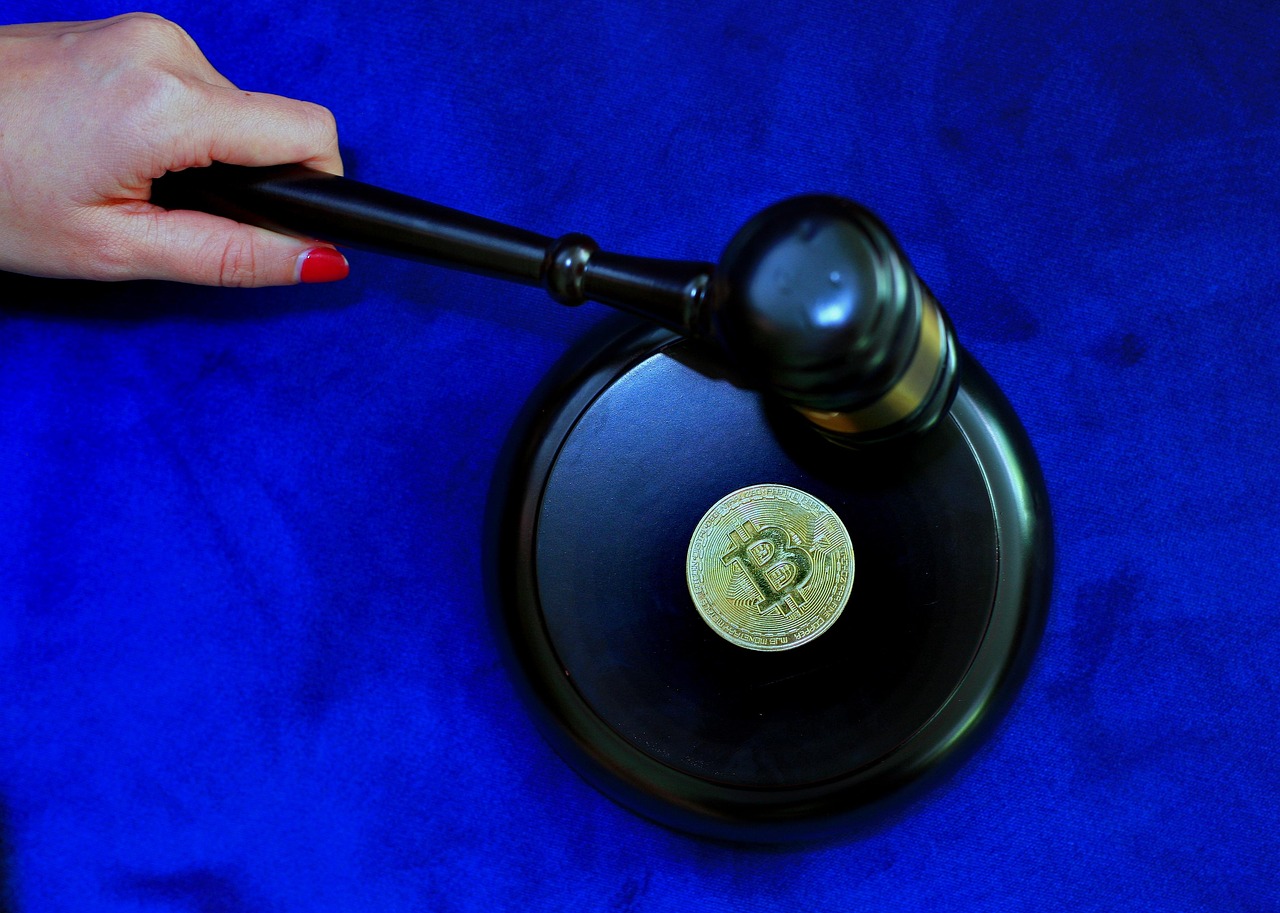
In the United States, the position remains more fragmented, but regulatory activity has increased. The GENIUS Act became law on 18 July 2025 and created a federal framework for payment stablecoins. In 2026, U.S. agencies continued implementation work, including customer identification and anti-money laundering obligations for permitted payment stablecoin issuers. Separately, the SEC and CFTC announced a memorandum of understanding on 11 March 2026 to improve coordination on digital asset oversight, and the SEC published crypto-focused interpretive and proposed rule materials during 2026. These developments do not resolve every classification dispute, but they show that digital asset compliance is moving from ad hoc risk management toward a more documented regulatory architecture.
Tax and financial crime rules are also becoming more concrete. IRS digital asset broker reporting on Form 1099-DA applies to certain transactions beginning with sales and exchanges effected on or after 1 January 2025, with reporting in 2026 and phased treatment for basis information. The OECD Crypto-Asset Reporting Framework is designed for automatic exchange of crypto tax information, with first exchanges expected in 2027 and many participating jurisdictions collecting information before then. FATF’s 2025 virtual assets update continued to emphasize anti-money laundering, counter-terrorist financing and Travel Rule implementation for virtual asset service providers.
The main compliance workstreams firms should prioritize
The most useful way to assess the current regulatory environment is by activity, not by label. Calling a product a wallet, exchange, protocol, payment token or rewards program does not settle the analysis. Regulators increasingly look at what the business actually does, who controls customer assets, whether customers expect profit from others’ efforts, how redemption works, what data is collected and whether the product reaches retail users.
| Workstream | What regulators are asking | Practical compliance response |
|---|---|---|
| Licensing and authorization | Is the firm operating a regulated exchange, custodian, broker, payment service, stablecoin issuer or crypto-asset service provider? | Map activities by jurisdiction, maintain an authorization calendar and document transitional permissions. |
| Token classification | Is the asset a security, commodity, payment stablecoin, e-money token, asset-referenced token or another regulated instrument? | Create token classification memos and update them when token economics, governance or marketing changes. |
| Stablecoin controls | Are reserves adequate, segregated, redeemable and disclosed? Who supervises the issuer? | Build reserve governance, reconciliation, redemption procedures, audit readiness and customer communication controls. |
| AML, sanctions and Travel Rule | Can the firm identify customers, monitor transactions and share required originator and beneficiary information? | Strengthen KYC, sanctions screening, blockchain analytics, suspicious activity escalation and Travel Rule messaging. |
| Custody and client assets | Who holds private keys, how are assets segregated and what happens in insolvency or a cyber incident? | Maintain wallet governance, key controls, segregation records, recovery procedures and customer asset disclosures. |
| Tax reporting | Can the business report proceeds, basis where required, customer identity and tax residency information? | Capture acquisition data, transaction history, customer certifications and reconciliation evidence early. |
| Market integrity | Are there conflicts of interest, wash trading risks, misleading promotions or market manipulation concerns? | Implement surveillance, listing standards, conflict disclosures and promotion review. |
United States compliance is becoming more rule-specific but still divided
The U.S. market remains difficult because several agencies can be relevant at the same time. The SEC focuses on securities laws and investor protection. The CFTC oversees derivatives markets and commodity-related conduct. FinCEN administers Bank Secrecy Act obligations for money services businesses and other covered financial institutions. The IRS handles tax reporting. Banking regulators matter when banks, stablecoin issuers or custody relationships are involved. For a crypto firm, the risk is not only choosing the wrong regulator. It is assuming that one regulator’s framework removes another agency’s authority.
Stablecoins are the clearest example of the shift toward specific obligations. The GENIUS Act created a legal category for permitted payment stablecoin issuers and placed emphasis on supervision, reserve quality, redemption and compliance with financial crime controls. Implementation remains critical because operational details determine whether a stablecoin program is viable in practice. A stablecoin issuer should not treat reserve disclosure, customer identification, sanctions screening and redemption mechanics as separate policy documents. Together, those controls explain whether the token can function as a credible payment instrument under regulatory review.
Tax reporting is another area where firms should avoid last-minute fixes. IRS guidance explains that broker reporting for certain digital asset transactions begins with transactions on or after 1 January 2025, with Form 1099-DA used to report digital asset proceeds. The IRS has also described transitional penalty relief for 2025 reporting where brokers make good-faith efforts. That relief should not be treated as a reason to delay systems work. Basis, wallet transfer data, customer identity records and transaction categorization are data problems before they become tax filing problems.
MiCA raises the baseline for firms touching the European market
MiCA matters because it provides one of the most developed regional frameworks for crypto-assets. It does not cover every digital asset activity, and it does not remove all national supervisory judgment. However, it gives firms a clearer structure for authorization, governance, white papers, conduct, market abuse controls and certain stablecoin-related obligations. That makes Europe a useful reference point even for firms headquartered outside the EU.
For crypto-asset service providers, the central issue is whether they provide services into the EU that require authorization. Firms that previously operated under a national registration, anti-money laundering regime or transitional arrangement need to confirm whether that position remains valid after the end of applicable transition periods. ESMA’s 2026 statement on MiCA transition expectations is especially relevant because it warned that firms not entitled to rely on transition arrangements could not keep providing services simply because they were already active.
For issuers, MiCA also changes the disclosure and governance conversation. A token white paper is not just marketing content; it can become a regulated disclosure document. Stablecoin-style products may trigger additional rules depending on whether they are classified as asset-referenced tokens or e-money tokens. For compliance teams, the product, legal, treasury and marketing functions need to work from the same classification analysis. A token cannot be described conservatively in legal documents while being promoted aggressively in public channels.
Global standards are narrowing the room for regulatory arbitrage
Even where national rules differ, global standard setters are pushing regulators toward similar outcomes. FATF’s virtual asset work focuses on AML, counter-terrorist financing and Travel Rule implementation. IOSCO’s 2023 policy recommendations for crypto and digital asset markets emphasize investor protection, market integrity, conflicts of interest, custody and cross-border cooperation. The Financial Stability Board has recommended consistent regulation and supervision of crypto-asset activities and stablecoin arrangements, especially where they may affect financial stability.
These standards do not automatically create direct legal duties for every firm. They matter because national regulators often use them when writing or interpreting domestic rules. A firm that builds controls around customer due diligence, asset segregation, conflicts management, operational resilience, disclosure and market surveillance is better positioned across jurisdictions than one that only satisfies a narrow local registration checklist.
Banks and institutional firms face another layer of scrutiny. The Basel Committee’s prudential standard for cryptoasset exposures is part of the Basel Framework and took effect from 1 January 2026. It addresses how banks should treat crypto exposures for capital purposes. That does not mean every crypto company is directly subject to bank capital rules. It does mean banking partners may ask tougher questions about asset type, custody, settlement, risk measurement and exposure limits before supporting crypto-related activity.
A practical roadmap for a defensible crypto compliance program
A strong compliance program should start with a written activity map. List each product, token, customer type, jurisdiction, legal entity, custody model, payment flow and revenue source. Then connect each activity to the rules that may apply. This exercise often reveals hidden regulated functions, such as order routing, staking facilitation, fiat on-ramp processing, hosted wallet custody, stablecoin distribution or promotional activity aimed at retail users. See also: Blockchain Technology.
Second, maintain a token classification process. This should include legal review, governance review, technical documentation, marketing claims, liquidity arrangements, tokenholder rights and any expectation of profit. Classification should be revisited when the token changes, when a network decentralizes or recentralizes, when yield features are added, or when marketing shifts toward investment language.
Third, build financial crime controls that match the risk of the business. For centralized platforms, that usually means customer identification, beneficial ownership checks where required, sanctions screening, transaction monitoring, suspicious activity reporting and Travel Rule capability. For firms interacting with decentralized protocols, the control design may differ, but regulators will still expect a reasoned approach to wallet risk, sanctioned addresses, mixers, fraud typologies and escalation procedures.
Fourth, treat custody and operational resilience as board-level issues. Private key management, cold storage, access control, vendor risk, incident response, proof of reserves, insurance claims and customer asset segregation should be documented before a crisis. Regulators are unlikely to accept broad statements about security if the firm cannot show who can move assets, how approvals work and how records are reconciled.
Fifth, coordinate tax, finance and product data. Digital asset reporting regimes require clean transaction records and customer information. If acquisition date, cost basis, wallet source, account ownership or tax residency is missing, a firm may not be able to reconstruct it reliably later. Compliance teams should be involved when new assets, staking features, NFT support, stablecoin pairs or cross-chain services are launched.
What investors and users should watch
Retail users do not need to read every regulatory filing, but they should understand the signals of a more accountable platform. A regulated or authorization-seeking firm should be able to explain where it is licensed, how customer assets are held, what happens if withdrawals are suspended, whether a stablecoin is redeemable, what disclosures apply, how tax forms are handled and whether promotions are approved for the user’s jurisdiction.
Regulation does not remove crypto market risk. Tokens can lose value, stablecoin confidence can weaken, smart contracts can fail and exchanges can suffer operational problems. Compliance reduces certain risks by forcing governance, disclosure and controls, but it does not guarantee performance or safety. The better question for users is whether a platform’s public claims match its legal status, product design and risk disclosures.
Frequently asked questions
Is crypto fully regulated in 2026?
No. Crypto is more regulated than it was several years ago, but coverage still depends on the jurisdiction and activity. Stablecoin issuance, exchange services, custody, broker reporting, financial promotions and AML controls may be regulated differently. Some decentralized or cross-border activities remain legally complex.
Does MiCA apply to non-EU crypto companies?
It can matter if a non-EU firm provides covered crypto-asset services into the European Union or targets EU users. Firms should not assume that being incorporated outside the EU avoids MiCA analysis. The practical issue is where services are offered, how users are solicited and whether an authorization or exemption is available.
What is the biggest compliance risk for crypto exchanges?
The largest risk is usually not one single rule. It is the failure to connect licensing, custody, AML, market surveillance, disclosures, tax reporting and product governance. Exchanges sit at the center of trading, custody, customer onboarding and data reporting, so weaknesses in one control can create regulatory exposure in several areas.
Why does Form 1099-DA matter?
Form 1099-DA matters because it turns certain digital asset broker transactions into reportable tax data. For platforms, it creates systems and recordkeeping obligations. For users, it may make crypto proceeds more visible to tax authorities and increase the importance of accurate personal transaction records.
Can compliance make a crypto product safe?
Compliance can reduce legal, operational and transparency risks, but it cannot make a volatile asset risk-free. A compliant product can still lose market value or face technology risk. Investors should treat regulatory status as one factor, not as a substitute for due diligence.