Digital assets in finance from crypto to stablecoins and tokenization
a[data-rs-seo-link]{text-decoration:underline!important;color:#1a56db!important;cursor:pointer!important;}a[data-rs-seo-link]{text-decoration:underline!important;color:#1a56db!important;cursor:pointer!important;}
What digital assets mean in modern finance
Digital assets are no longer limited to speculative cryptocurrencies. In financial markets, the term commonly covers crypto assets such as bitcoin and ether, stablecoins, tokenized securities, digital collectibles, governance tokens and blockchain-based records of ownership. The common feature is that value or ownership is represented digitally, usually on a distributed ledger or similar technology. That does not make every digital asset the same. A payment stablecoin, a tokenized Treasury fund share and a meme coin may all use blockchain rails, but they carry very different legal rights, market risks and investor expectations.
For readers following Digital Assets, the practical shift matters more than terminology. The market is moving away from a broad crypto narrative and toward specific use cases: payment settlement, tokenized funds, collateral mobility, trading access and programmable financial infrastructure. At the same time, regulators are trying to determine which assets are securities, commodities, payment instruments or something else.
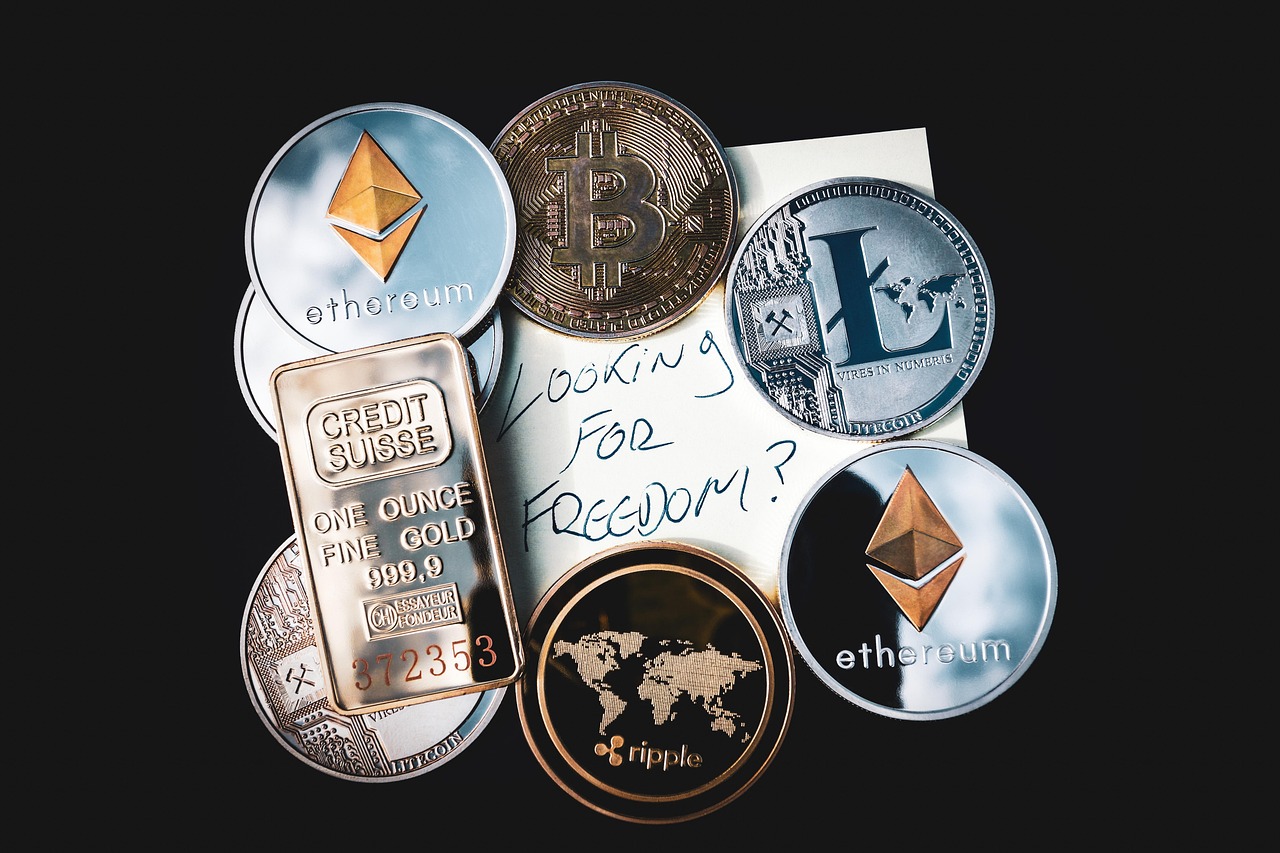
This distinction matters because digital assets are not a single asset class. They are a technology wrapper, a market structure and a legal question at the same time. The value of any individual token depends on what it represents, who controls it, how it is transferred, whether it has enforceable claims and whether liquid markets exist.
The main categories of digital assets
A useful starting point is to separate the token from the claim behind it. Some tokens are native to a blockchain network. Others are digital representations of cash, securities or real-world assets. The differences are not cosmetic; they affect custody, valuation, tax treatment, disclosure and regulation.
| Category | Typical purpose | Key question |
|---|---|---|
| Cryptocurrencies | Network use, store-of-value narratives, trading and settlement | Does the asset have durable demand beyond speculation? |
| Stablecoins | Payments, trading liquidity and dollar-denominated settlement | Are reserves high quality, segregated and redeemable? |
| Tokenized securities | Digital representation of stocks, bonds, fund interests or other regulated instruments | Are investor rights and compliance controls legally enforceable? |
| Tokenized real-world assets | On-chain records linked to assets such as funds, credit, invoices, real estate or commodities | Is there a reliable legal bridge between the token and the underlying asset? |
| NFTs and digital collectibles | Unique digital identifiers for art, access rights, gaming items or collectibles | What rights, if any, does ownership actually transfer? |
| Governance and utility tokens | Protocol participation, voting, access or incentives | Is the token mainly functional, investment-like or both? |
This classification shows why broad statements about digital assets can be misleading. A stablecoin may be designed to hold a one-dollar value, while an unbacked crypto token may fluctuate sharply. A tokenized bond may represent a regulated financial claim, while an NFT may represent only a limited license or digital pointer. The technology can look similar even when the legal and economic substance is different.
Why stablecoins became a central digital asset use case
Stablecoins have become one of the main bridges between crypto markets and traditional finance because they address a basic operating need: blockchain transactions require a relatively stable unit of account. Traders use stablecoins to move between volatile tokens without returning to bank rails for every transaction. Businesses and payment firms study them because they can support near-real-time settlement across borders and platforms.
The stablecoin model is simple in theory and complex in practice. A user receives a digital token intended to maintain value against a reference asset such as the U.S. dollar. The issuer holds reserves and promises redemption according to its terms. The quality of that arrangement depends on reserve assets, disclosure, audits or attestations, redemption rules, legal structure, sanctions controls and operational resilience.
In the United States, the GENIUS Act was enacted on July 18, 2025, creating a federal framework for certain payment stablecoin issuers. The Financial Stability Oversight Council later described the law as establishing licensing requirements, reserve rules, monthly reserve reporting, anti-money-laundering obligations and protections related to reserve segregation. Those requirements do not eliminate risk, but they show how stablecoins are moving from a lightly defined crypto product toward regulated payment infrastructure.
The unresolved question is how much stablecoin activity will become mainstream finance and how much will remain crypto-native. Stablecoins can improve settlement speed, but they also introduce risks around issuer concentration, reserve liquidation, wallet security, illicit finance controls and dependence on public blockchain networks. For investors, the key point is that a stablecoin is not automatically equivalent to a bank deposit, even when it references the same currency.
Tokenization is the bigger institutional story
If stablecoins are the payment layer, tokenization is the ownership layer. Tokenization means representing a claim on an asset through a programmable digital record. The asset could be a government bond, a money market fund share, private credit exposure, a commodity claim or another financial instrument. The appeal is that ownership, transfer instructions and settlement logic can be handled in a more integrated way.
Reports from the Bank for International Settlements, the Financial Stability Board and the World Economic Forum have all treated tokenization as a serious development in financial market infrastructure. The potential benefits usually fall into four areas: faster settlement, reduced reconciliation work, improved transparency and broader access through fractionalization. Those benefits are conditional. Tokenization does not automatically create liquidity, remove counterparty risk or resolve legal uncertainty.
The strongest early use cases are likely to involve assets that already have clear legal frameworks and institutional demand. Tokenized money market funds, tokenized Treasury exposure and tokenized collateral tools are more realistic near-term examples than broad promises to tokenize every illiquid asset. A tokenized real estate claim, for example, still needs reliable title records, investor protections, servicing arrangements, valuation methods and secondary-market demand.
For investors, the useful question is what tokenization improves compared with the existing system. If the token only adds a blockchain label without improving settlement, transparency, access or operating efficiency, it may be marketing rather than infrastructure. If it reduces friction while preserving legal rights and compliance, it may become part of the next generation of market plumbing.
Regulation is shifting from enforcement debates to market structure
Digital asset regulation has moved through several phases. Early rules focused on anti-money-laundering obligations, tax reporting and enforcement against fraud. Later debates centered on whether particular crypto assets were securities, commodities or neither. By 2025 and 2026, the focus had shifted toward market structure: who can issue, trade, custody and settle digital assets, and under which regulator.
The European Union’s Markets in Crypto-Assets Regulation, known as MiCA, created a harmonized framework for crypto-asset service providers and certain token issuers. Key parts of MiCA began applying in 2024, and ESMA stated that the transitional period for crypto-asset service providers across the EU expired on July 1, 2026. After that date, firms providing covered crypto-asset services to EU clients generally needed authorization unless a narrow exception applied.
In the United States, the picture has been more fragmented. The SEC approved spot bitcoin exchange-traded products on January 10, 2024, approved rule changes for ether-based exchange-traded products in May 2024, and in July 2025 permitted in-kind creation and redemption for certain crypto asset exchange-traded products. Those steps made some crypto exposure easier to access through brokerage accounts, but they did not settle the full legal status of the broader token market.
Congressional efforts to create a broader U.S. digital asset market structure framework continued into 2026. As of September 18, 2026, market structure legislation had not become a final comprehensive law. That distinction is important: stablecoin rules advanced through federal legislation, while the wider question of SEC and CFTC authority over many crypto assets remained politically and legally contested.
How digital assets change the investor checklist
Traditional investors often begin with revenue, cash flow, yield, collateral, management quality and valuation. Digital assets require those questions, but they also add several more. The first is custody. Who controls the private keys or account credentials? Is custody self-managed, exchange-based, institutional or embedded in a fund structure? Custody failure can turn a sound investment thesis into a total loss. See also: Blockchain Technology.
The second is the nature of the claim. A token may give the holder no enforceable right beyond transferability. Another token may represent a contractual claim on reserves or a regulated security interest. Investors should distinguish between price exposure, ownership rights, governance rights and redemption rights.
The third is liquidity. A token can trade continuously and still be illiquid when market depth is thin, listings are concentrated or large holders dominate supply. On-chain transparency may reveal wallet movements, but it does not guarantee a fair exit price in stressed markets.
The fourth is regulatory classification. A token’s status can affect exchange listings, disclosure obligations, custody options, tax reporting and whether U.S. or non-U.S. investors can access it. A project may describe a token as utility-based, but regulators may focus on how it was sold, marketed and managed.
The fifth is operational resilience. Smart-contract bugs, oracle failures, bridge exploits, governance attacks and platform outages are not abstract risks. They are part of the asset’s economic profile. Digital assets can make settlement faster, but faster settlement also means mistakes and attacks can become final quickly.
A practical framework for evaluating digital assets
Because the digital asset universe is broad, a structured framework is more useful than a prediction. Investors, analysts and businesses can evaluate opportunities through six questions.
- What does the asset represent? Identify whether it is native crypto, a payment claim, a security, a collectible, a governance right or a tokenized real-world asset.
- Who is responsible? Determine whether there is an issuer, sponsor, protocol foundation, custodian, reserve manager or regulated intermediary.
- What rights does the holder have? Review redemption rights, voting rights, legal claims, income rights and limitations.
- How is value maintained or created? Separate reserve backing, network demand, fee capture, collateral value and speculative momentum.
- Where does liquidity come from? Examine exchange concentration, market makers, redemption mechanisms, lockups and secondary-market depth.
- What could break? Consider regulatory changes, smart-contract risk, custody failure, reserve stress, governance capture and loss of user demand.
This framework helps separate durable digital asset trends from short-lived narratives. Bitcoin exchange-traded products, regulated stablecoins and tokenized fund shares are different from speculative tokens launched mainly around attention. Some digital assets may become embedded in financial infrastructure; others may remain high-risk trading instruments.
What to watch next
The next phase of digital assets will likely be measured less by token launches and more by integration. Watch whether regulated institutions use blockchain rails for settlement, collateral management, fund administration and payments. Watch whether stablecoin issuers can maintain transparent reserves under stress. Watch whether tokenized securities develop real secondary-market liquidity rather than isolated pilots. Watch whether regulators can provide clear rules without removing the open-network features that made the technology useful in the first place.
There is also a geographic dimension. The EU has moved ahead with a comprehensive crypto framework under MiCA. The United States has advanced stablecoin legislation but continues to debate broader market structure. Other financial centers are experimenting with licensing regimes, sandboxes and tokenized bond or fund projects. The result is not one global digital asset system, but a patchwork of rules that firms must navigate.
The balanced conclusion is straightforward. Digital assets are becoming more institutional, but institutional interest does not remove risk. The category includes serious financial infrastructure, speculative markets and unfinished legal questions at the same time. The best approach is to evaluate the asset, the rights, the market structure and the regulation before evaluating the price.
Frequently asked questions
Are digital assets the same as cryptocurrencies?
No. Cryptocurrency is one type of digital asset. The broader category can include stablecoins, tokenized securities, tokenized real-world assets, NFTs, governance tokens and other blockchain-based representations of value or rights.
Why are stablecoins important to digital asset markets?
Stablecoins provide a relatively stable unit of account for trading, payments and settlement. They are widely used because they can move across blockchain networks faster than many traditional payment rails, but their safety depends on reserve quality, redemption rules, regulation and operational controls.
What is tokenization in finance?
Tokenization is the process of representing ownership or claims on an asset through a digital token or ledger entry. In finance, it can apply to fund shares, bonds, credit instruments, commodities or other assets. Its value depends on whether the token has enforceable legal rights and useful market infrastructure.
Are digital assets regulated?
Yes, but regulation varies by jurisdiction and asset type. Some digital assets may fall under securities laws, commodities rules, payments regulation, tax reporting rules or anti-money-laundering obligations. A single label such as “token” does not determine the legal treatment.
What is the biggest risk in digital assets?
There is no single biggest risk for every asset. The main risks include volatility, custody failure, unclear legal rights, weak liquidity, cyberattacks, smart-contract flaws, reserve problems, fraud and sudden regulatory changes. The relevant risk depends on the specific asset and how it is held.